
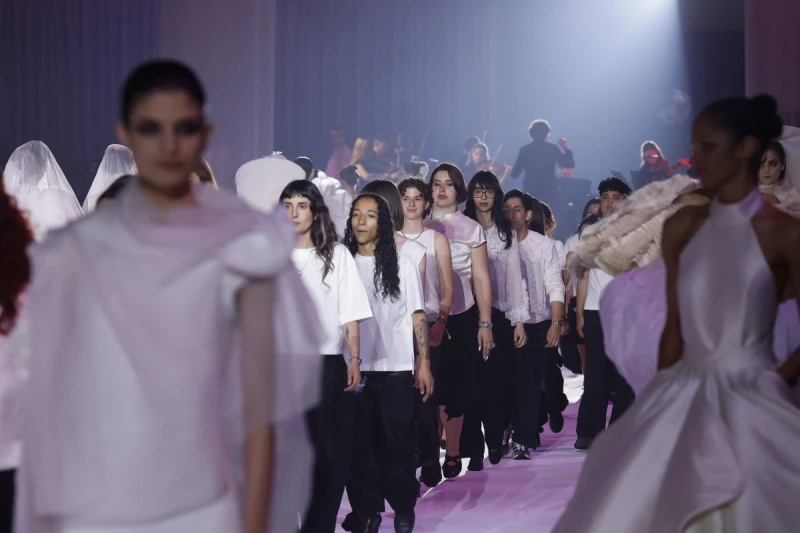
On April 22, 2026, ESDI experienced one of its most special nights with its participation in the opening show preceding the presentation of haute couture designer Stéphane Rolland‘s collection. As part of Barcelona Bridal Fashion Week 2026, the French designer’s fashion house opened the gala to emerging talent through the Sculpted by Nature project, developed in collaboration with three Barcelona design schools. At ESDI, seven students and recent graduates of the Bachelor’s Degree in Fashion Design and the Advanced Vocational Training Programme in Fashion Styling designed seven wedding dresses, made with fabrics donated by Gratacós, and presented under the direct mentorship of the French couturier .
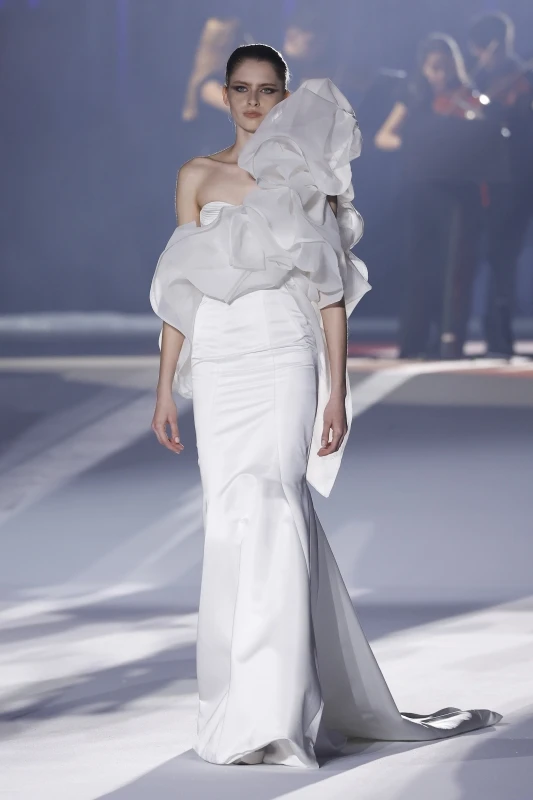
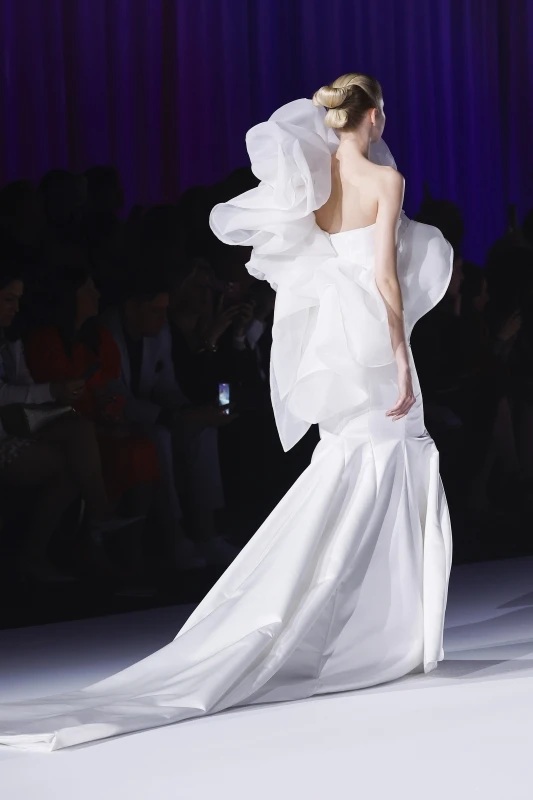
In the case of ESDI, participation in the fashion show once again highlighted a way of understanding education linked to industry, craftsmanship, and creative experimentation. The pieces presented showcased a great diversity of styles, from more sculptural and architectural proposals to others infused with nature, memory, textile transformation, or poetic imagery. Each design brought to the runway its own unique perspective on the contemporary bridal world, confirming the students’ ability to translate complex concepts into solid, sensitive, and visually powerful garments.
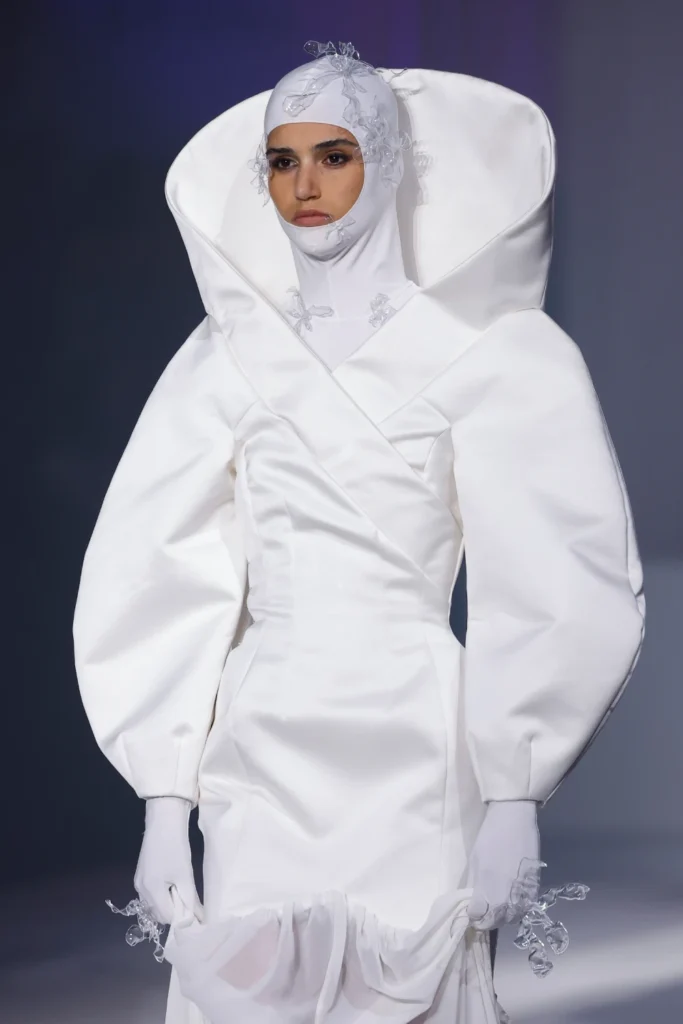
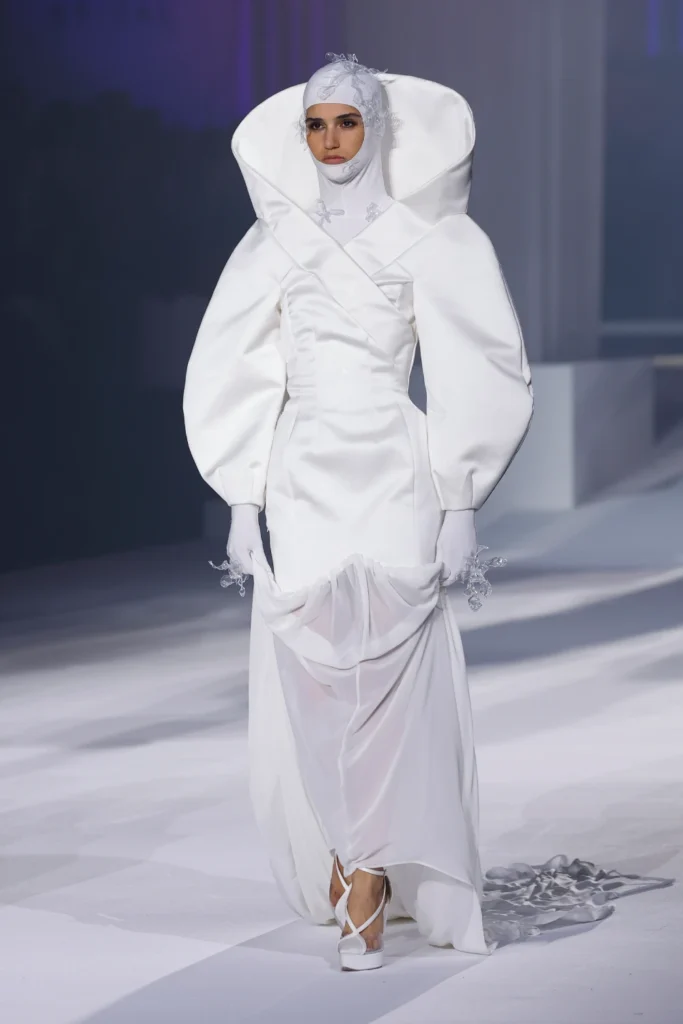
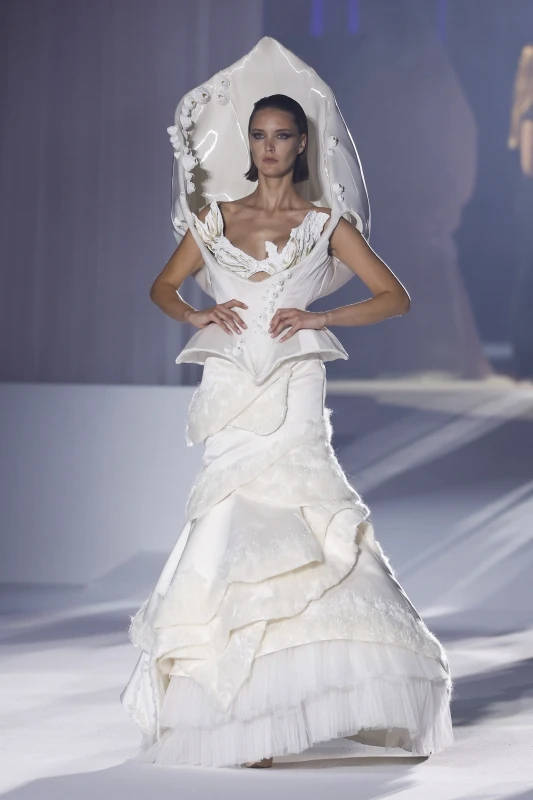
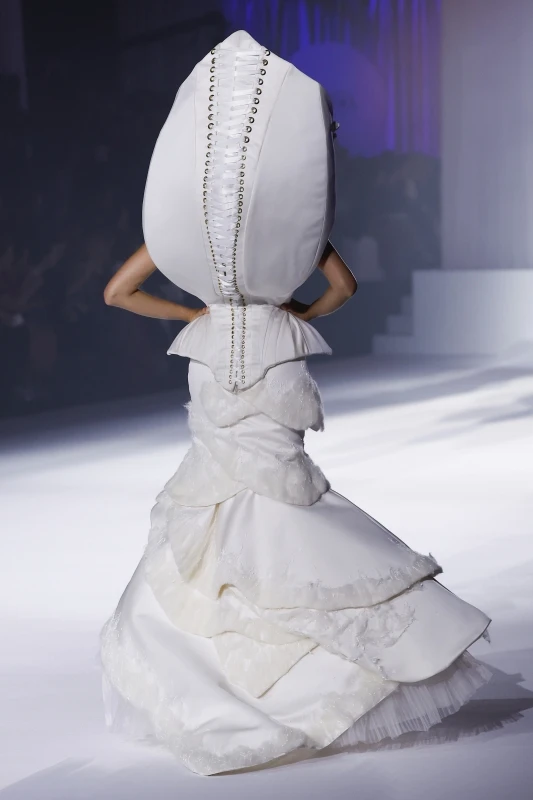
ESDI’s participation was articulated through the work of Francisca Latapiat, Adriana Martin, Tatiana Muraveynikw, Judit Serra Cheto, Eiden Rodríguez, Marian A. Ben Da Silva, and Ronald Cáceres. The first ESDI collection to grace the runway was Francisca Latapiat’s, which presented a universe inspired by “Flowering Desert.” Her project stems from the contrast between the urban landscape of Santiago, Chile, the presence of the Andes Mountains, and the memory of the Atacama Desert in bloom, a metaphor for the beauty that endures and reappears in the most unexpected places. From this idea, she constructed a collection in which nature and resilience become the central theme, with the hood as a symbol of warmth, protection, and inner strength. Her designs feature mikado, organza, crepe, taffeta, and silk and tulle flowers, in pieces that speak of blossoming, transforming, recomposing, and resisting.
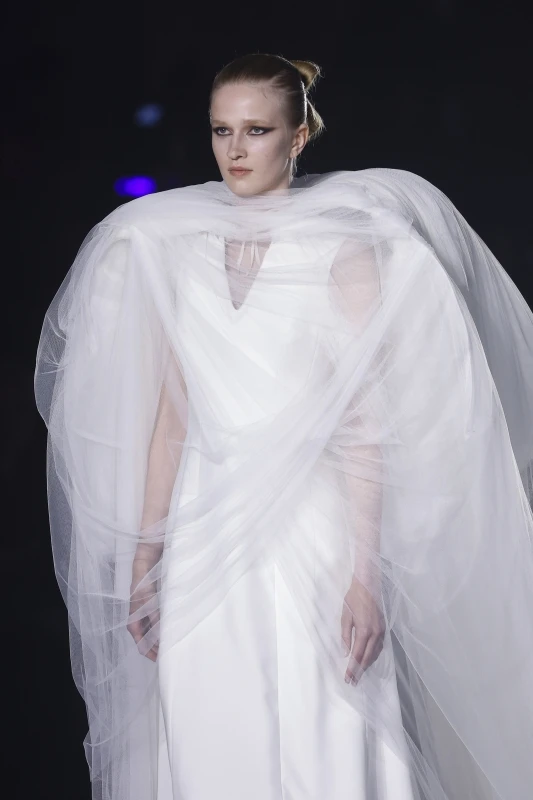
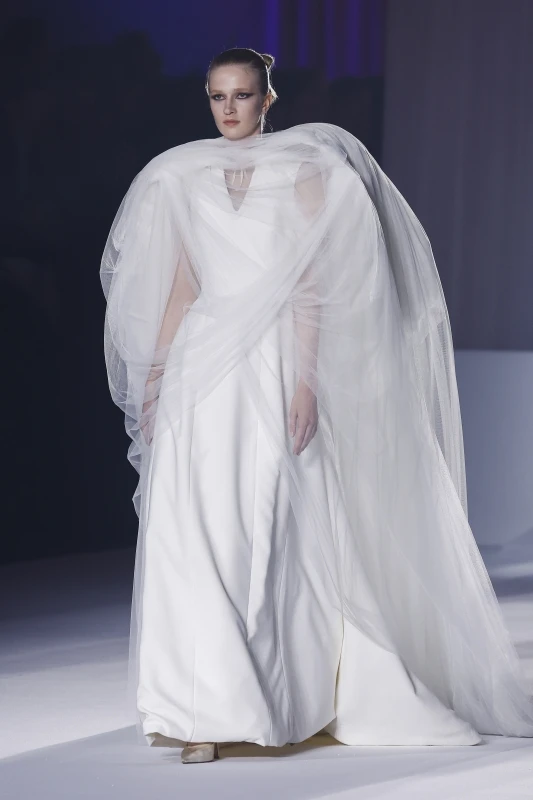
Next up was Adriana Martin, with a collection entitled “Groot Reverie“. Her collection takes as its starting point the organic forms of caves and the relationship between emptiness and solid structure, translating this tension to the bridal gown. The result is a series of silhouettes that evoke refuge, mystery, and protection, with mikado bodices, organza domes and wraps, front draping, and volumes that seem to sculpt the space around the body. Her work proposes a bride who is both architectural and organic, in a balance between restraint, strangeness, and beauty.
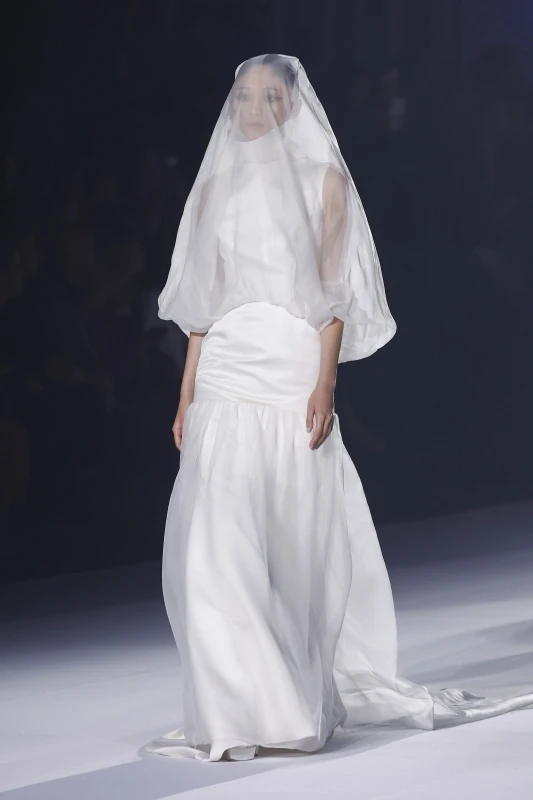
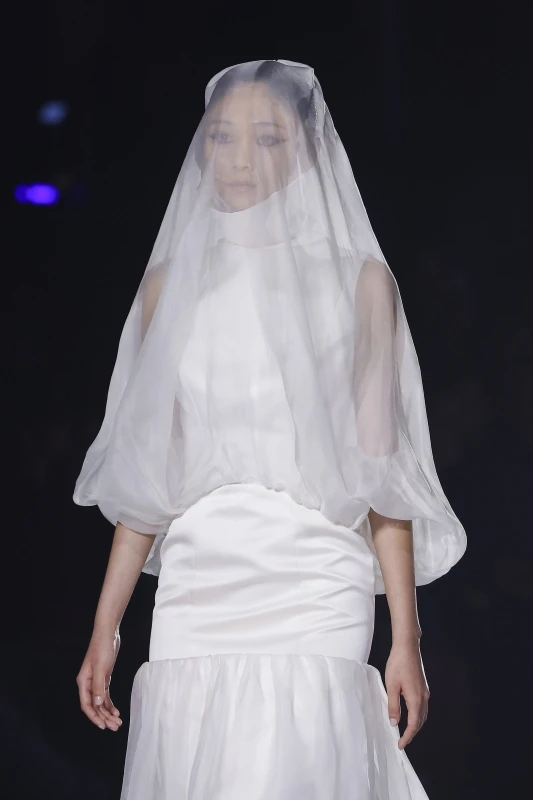
The third show featured Tatiana Muraveynikw, designer of “Bird-Maiden“. Her project draws inspiration from Georgy Sviridov’s musical suite “The Snowstorm ” and the image of a bride as the soul of a bird: free, delicate, and purified by love. From this idea, she constructs an ethereal and ceremonial vision, imbued with feathers, veils, transparencies, light layers, and soft volumes. Her designs combine corsetry, layered knitwear, and large, enveloping pieces to create a bridal figure suspended between the earthly and the ethereal, with a particularly lyrical sensibility.
Next up was Judit Serra Cheto, who presented “La danse de l’eau” on the runway. Her collection draws inspiration from the essence of water in nature and its ability to flow, envelop, transform, and shape everything it touches. The sea, rain, rivers, and waterfalls are translated into lightweight fabrics, pleats, iridescent organza, silks, and long trains that cascade naturally over the body. Rather than simply reproducing literal forms, her designs seek to capture the elegance, serenity, movement, and grace of water, transforming the wedding dress into an extension of this continuous and organic gesture.
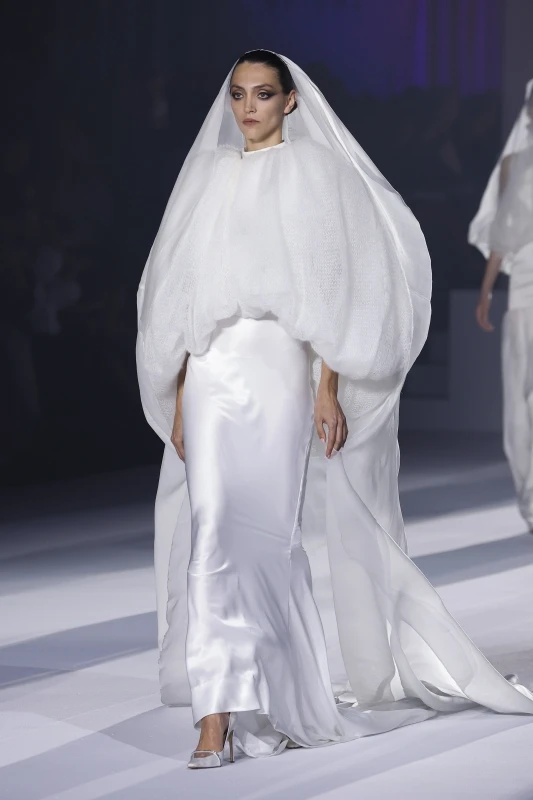
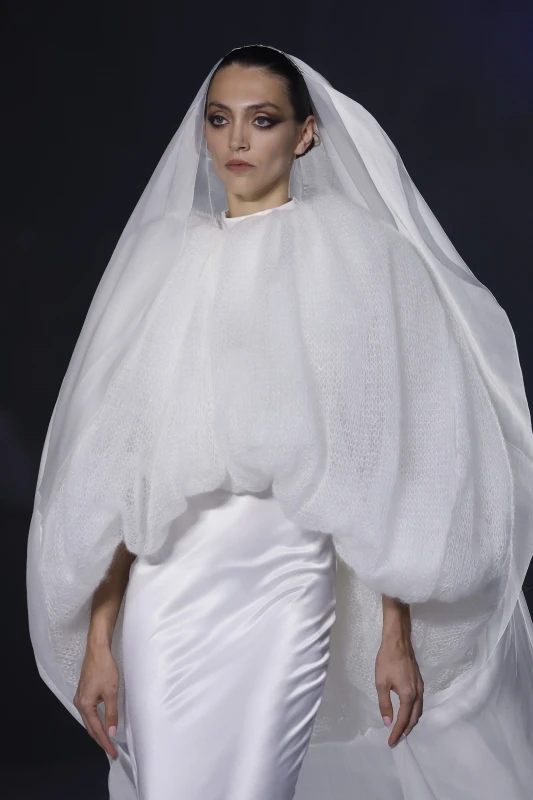
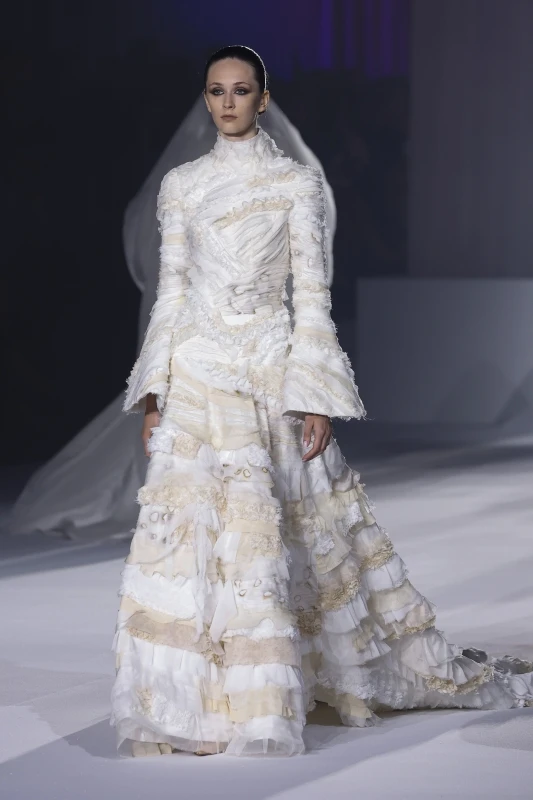
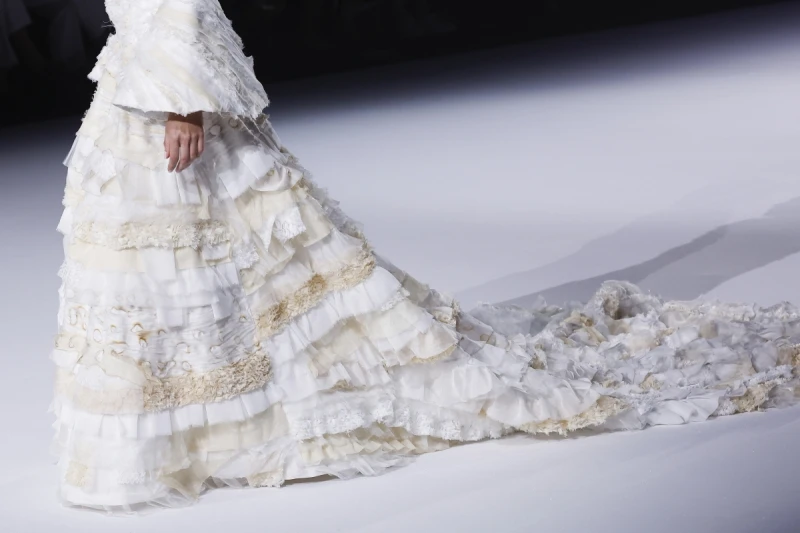
The fifth proposal was by Eiden Rodríguez, who presented “Baiser de papillon de nuit” (Kiss of a Night Butterfly), a collection inspired by moths. Her starting point reinterprets one of the gestures most associated with textile deterioration—the marks these insects leave on clothing—transforming it into an aesthetic language. Eiden uses the moth as a symbol of change, the search for light in the darkness, spiritual growth, and transformation, translating this idea into dresses in off-white tones, with an aged appearance, multiple textures, and different shades of broken white. In the piece seen on the runway, this research materialized in a silhouette with a strong material character, a worn surface, layered construction, and a stage presence that transformed erosion and fragility into beauty.
In sixth place was Marian A. Ben Da Silva, with “The Memory of Water on Stone“, a collection inspired by erosion, the passage of time, and the dialogue between water and stone. Her research focuses on how the sea transforms matter: the repeated movement of the tides, the surface of rocks, the foam, organic reliefs, and marine life clinging to solid bodies. All of this is translated into dresses where curves, folds, layering, dynamic volumes, and textures that evoke shells, waves, and sediment coexist. The result is a collection of great sculptural power, where the softness of movement is combined with precise construction.
ESDI’s presentation concluded with Ronald Cáceres’s “Symbiosis“, a collection that views nature as a system of balance, transformation, and interdependence. His dresses represent the connection between air, water, light, and earth through the interplay of mikado, chiffon, transparencies, embroidery, and organic volumes. The silhouettes developed for this project transform the bride into a body in harmony with its surroundings, where matter and movement relate with an ethereal and contemporary sensibility. His vision offers a serene, organic, and poetic interpretation of bridal wear, in which structure and fluidity coexist without one dominating the other.
Beyond the visual impact of the show, ESDI’s participation in this Barcelona Bridal Night at BBFW confirms the value of an educational program capable of guiding personal creative processes and transforming them into mature, complex, and visually striking designs. The opening show, presented by the students, was not only an exercise in visibility but also a demonstration of how emerging designers can engage with the codes of Haute Couture while maintaining their own unique identity. On an evening conceived by Stéphane Rolland as a tribute to love, the transmission of knowledge, and new generations, ESDI showed that young talent can also grace the international runway with its own distinctive voice.