
HISTORY OF ESDI
ESDI was founded in 1989 in response to a real need in the industry: to incorporate design as a driver of innovation and competitiveness. Established by more than 90 companies and organizations in the textile sector, the school was a pioneer in introducing design into the university setting in Spain thanks to its affiliation with the prestigious Ramon Llull University.

A SCHOOL BORN FROM INDUSTRY
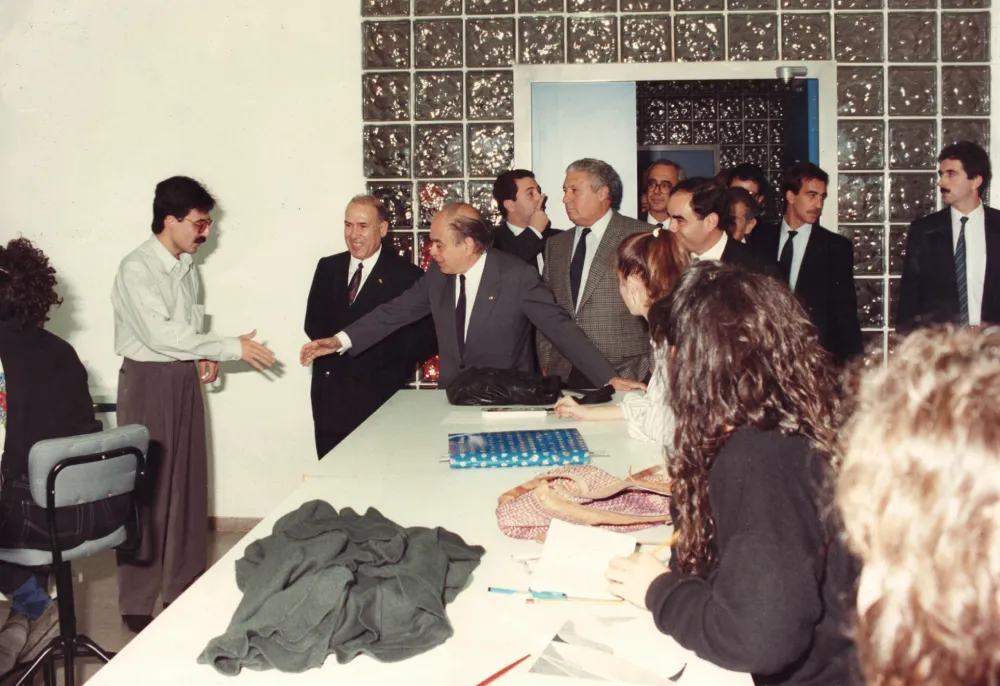
ESDI was founded in 1989 by the Textile Design Foundation FUNDIT as a direct response to a real need in the production sector. More than 90 companies and business groups in the textile sector, together with government bodies (Ministry of Industry and Generalitat of Catalonia, among others), promoted the creation of the first Higher Education School of Textile Design in Spain, with the objective of incorporating design into industrial processes and strengthening the competitiveness of the business fabric. From the beginning, the relationship between design and business has been part of ESDI’s DNA.
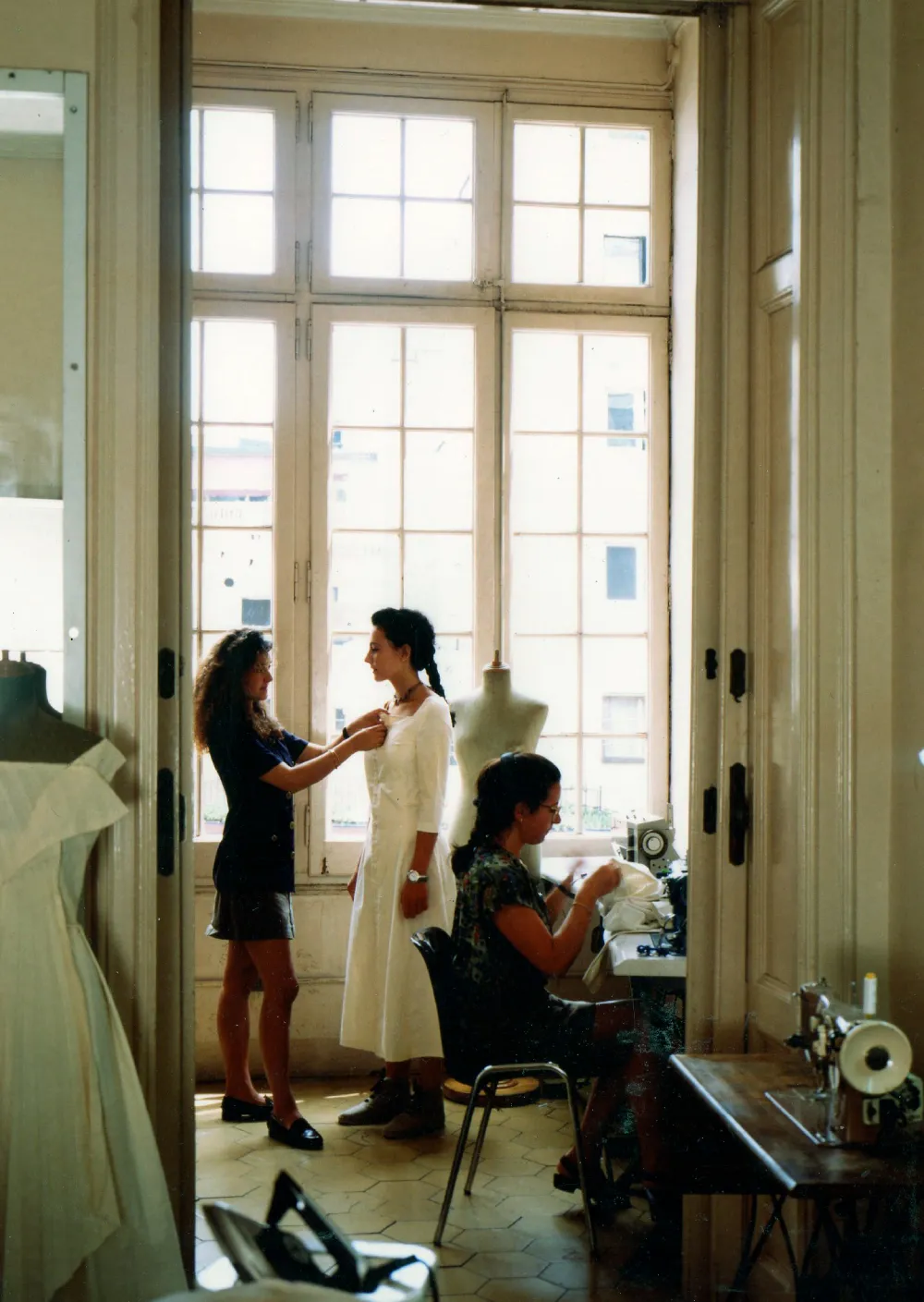
ESDI is located in the listed Docks Vells building in Sabadell, large warehouses dating from the early 20th century where raw textile materials were stored for companies belonging to the Manufacturers’ Guild. In 1989, the building underwent a transformation to become the current ESDI Higher School of Design. The project received the Bonaplata Restoration Prize in 1991, recognized as a prime example of the successful restoration of historic spaces left by the Industrial Revolution in Catalonia.
PIONEERS IN UNIVERSITY TEACHING OF DESIGN
In the early 1990s, ESDI became a pioneering center by introducing design into the university setting. In 1992, it established its affiliation with Ramon Llull University , becoming the first design school in Spain to be affiliated with a university. Years later, this enabled ESDI, to become the first center in Spain to offer an official university degree in Design. This step consolidated an innovative academic model that combines academic rigor, project-based practice, and direct connections with the industry.
In 2000, ESDI merged with the EATM School of Arts and Techniques of Fashion in Barcelona, which was founded in 1968 by a group of textile and fashion collection manufacturers. This connection with business and the textile industry is the reason for the existence of both institutions and their merger, and a fundamental pillar of their educational model. After years of maintaining both names, EATM has become ESDI’s Barcelona campus, where continuous and advanced training is offered for specific professional profiles within the fashion, styling, and image industries.
FROM TEXTILE ORIGINS TO A MULTIDISCIPLINARY VISION
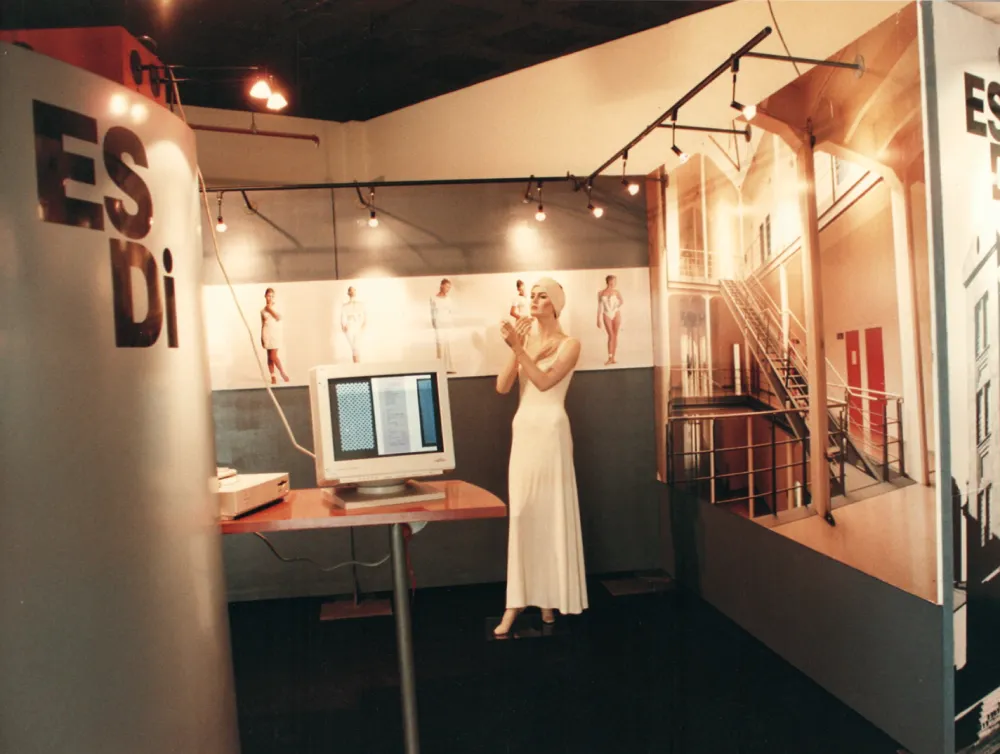
Starting with its initial studies in textile design, ESDI gradually expanded its academic offers, incorporating new disciplines and exploring emerging fields. In this process, the school also created the country’s first electronic art studios, anticipating the technological and cultural shifts that would shape contemporary design.
In 2007, this evolution culminated with the creation of the University Degree in Design , structured in six specializations: fashion, graphic design, product design, interior design, audiovisual design, and multidisciplinary integration. A degree that places the project as the central axis of learning and prepares students to intervene in real and complex contexts.

INNOVATION, BUSINESS AND SOCIAL COMMITMENT
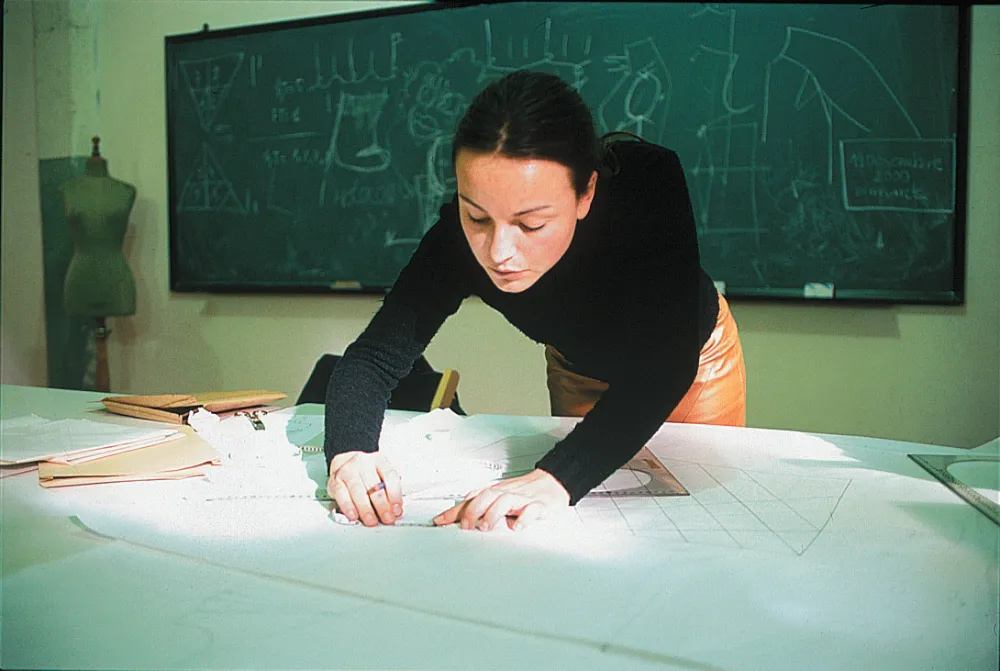
The relationship with industry remains a fundamental pillar today. ESDI works continuously with organizations in various sectors to develop real-world projects, applied research, and training programs aligned with market needs. Examples include projects related to sustainability, materials innovation, or social design, as well as collaborations with leading companies in the sector.
Along this line, ESDI has promoted initiatives such as the ESDI Business Commission, composed of active professionals from relevant companies — many of them alumni — who participate in updating the curriculum and contribute to keeping training connected with professional reality.
A LOOK TOWARDS THE FUTURE
Nowadays, ESDI is undergoing a natural evolution towards an increasingly international and diverse context. The school is expanding its global reach, strengthening its continuing education offers, and developing new programs in collaboration with companies and institutions, responding to the constant transformations in design and society.
True to its origins, ESDI not only trains designers for the present, but also professionals capable of anticipating change, thinking critically, integrating technology and innovation from a humanistic perspective, and acting as agents of transformation. For over three decades, this school has understood design as a tool for imagining and building possible futures.
REQUEST INFORMATION
Want to learn more about ESDI? You can fill out the form or contact us by phone or email.