

Sandra Rodríguez González, alumna of the Degree in Graphic Communication Design at ESDI, has been awarded bronze in the Publication Design category at the ADC*E Student Awards 2025, one of the most important European awards for young design talents.
A recognition that, far from being seen as a goal, Sandra experiences as a boost full of mixed emotions.
An award between gratitude and impostor syndrome
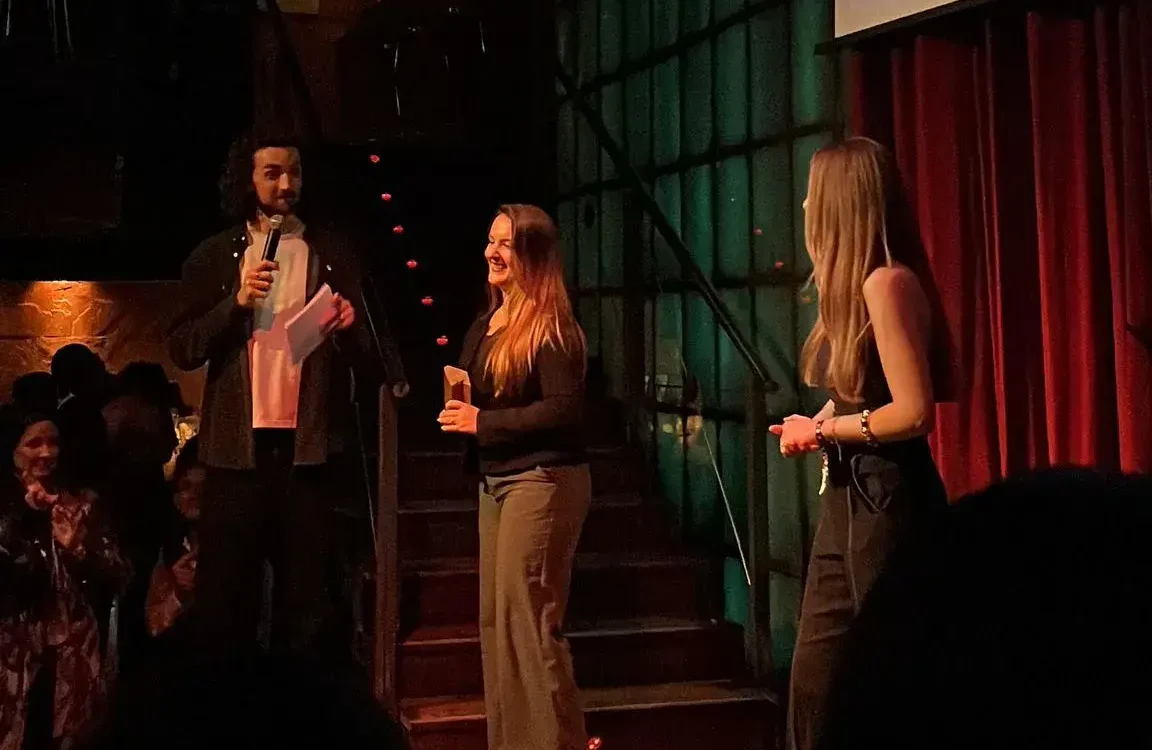
“I went to the ADC*E Awards with no expectation of winning,” she admits.
She traveled with another ESDI alumna and, after hearing the first awards, she assumed her project wouldn’t be recognized. “So, when it happened, it was a huge surprise.”
On a personal level, the award represents gratitude and validation after many hours of work and a process deeply involved at a family level. Professionally, however, a more complex feeling emerges: “It still coexists with a little impostor syndrome. I value it immensely, I know it will open doors, but I still find it hard to fully believe it.”
An editorial project to talk about grief without taboos
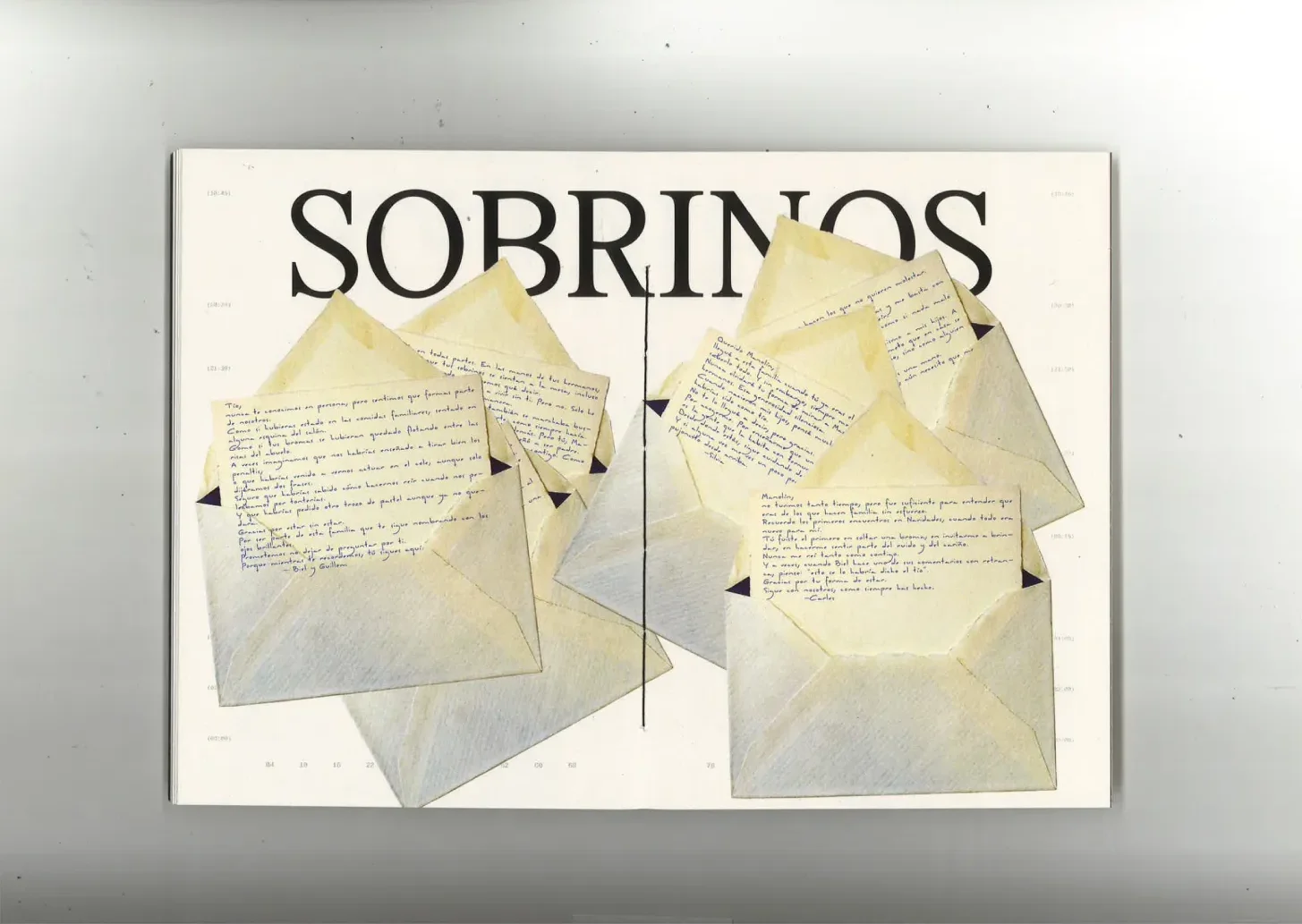
The awarded project stems from an intimate experience: the death of her uncle. From there, Sandra wanted to approach grief as a diverse and deeply personal process.
“For a long time, grief has been a taboo topic. I wanted to show that within the same family, each person experiences it differently, and none is more valid than another,” she explains. From introversion to the most open expression of emotions, the project emphasizes mutual support and the importance of not erasing the presence of those who are no longer here, but learning to live with their memory over time.
Research is a key part of her working method.
Sandra dedicates a significant portion of the process to documentation and building a solid concept before designing. “For me, it is essential that projects aren’t made randomly, but have deep development and a clear intention to reach people.”
This sensitivity is also reflected in a recognizable aesthetic: serif fonts, delicate compositions, and a visual tone that avoids aggressiveness. “When someone sees my projects, I want them to notice there is sensitivity behind it, something close, almost tender.”
Emotional references and archival aesthetics
Her influences include psychological research on grief phases, reinterpreted from a personal perspective, as well as cultural and artistic references. She highlights artist Ethel Cain, both for the emotional weight of her lyrics and the typographic treatment in her latest album.
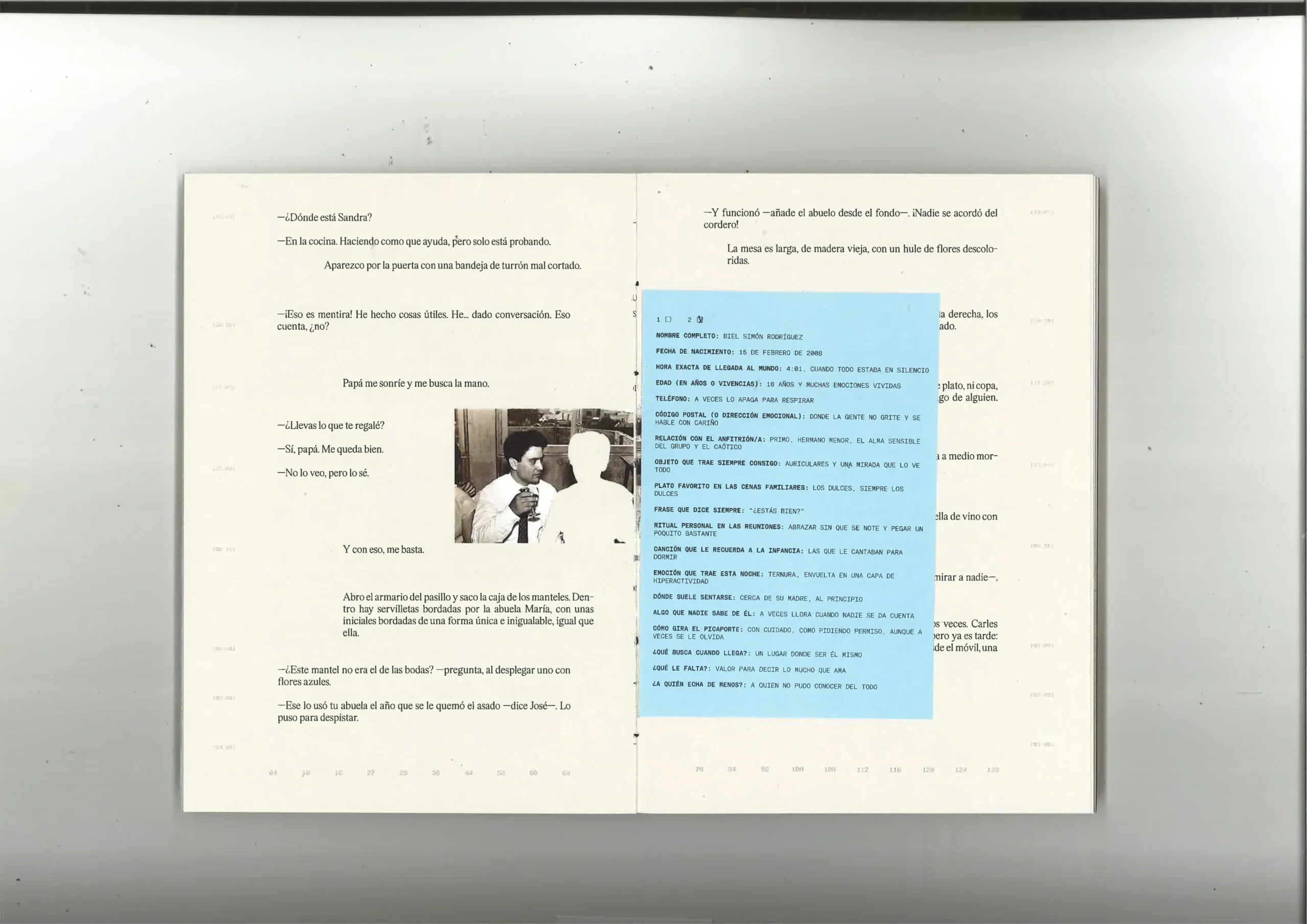
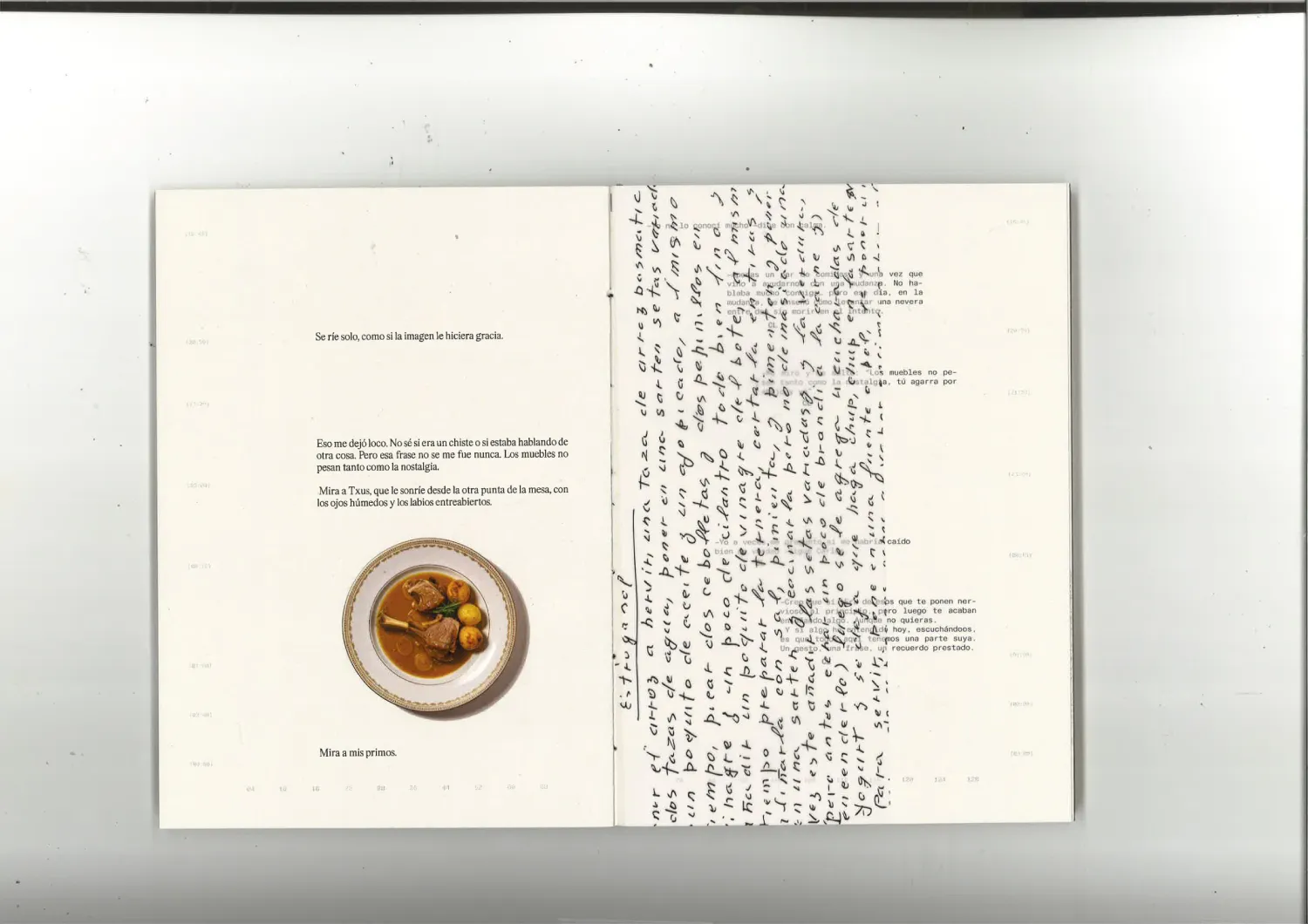
Visually, the project sought a domestic archive aesthetic: family photographs, scans, homemade materials.
“I wanted it to look like that archive we all have at home, built with memories.”
ESDI as creative support and challenge
Looking back, Sandra clearly identifies the role of her degree and teacher guidance in this recognition.
“The degree helped me build a solid working process and understand the importance of research to ensure the final result is well-executed.”
She highlights her thesis tutor’s role, who constantly pushed her to go further: “He accompanied me a lot and challenged me artistically, making me rethink the project repeatedly to go deeper.”
From classroom to professional world
Although she still finds it hard to define herself as a “design professional,” Sandra sees this stage as a continuous learning process. “Graduating is like starting to learn to live: you apply what you’ve learned, but you keep learning constantly.”
Currently working at ESDI, she acknowledges that the experience allowed her to recognize her evolution and the value of the knowledge gained compared to first-year students.
For Sandra, her portfolio has been key. “It’s a designer’s real curriculum,” she states.
In a highly competitive sector, graduating from ESDI with a well-prepared portfolio made a difference, especially in gaining internships and job opportunities.
“You notice when a design is well-developed, with concept and criteria. That makes you more professionally valued.” In her case, that portfolio was decisive for joining ESDI and continuing to grow within the academic and creative field.
The value of editorial design today
In an increasingly digital context, Sandra argues that editorial design still plays a relevant, though different, role. “We are seeing a revaluation of the physical: vinyl records return, film photography…”
Although it has lost mass diffusion in informational areas, editorial design has gained artistic and conceptual value, especially linked to design and art.
Looking ahead, Sandra wants to continue exploring her identity as a designer. Maintaining her sensitivity, she is interested in experimenting with more technological, robotic, or cyberpunk languages.
“I want to discover how far I can go, explore other perspectives, and continue building myself as a designer.”
A rewarding experience at ESDI
If she had to summarize her time at ESDI in one word, it would be rewarding. She highlights contact with teaching references, the diversity of critical perspectives, and the constant support of faculty.
“ESDI pushes you to be critical, to read, to have references, not to get stuck. To try, make mistakes, look outward, and nourish yourself from other contexts.” An experience that, she assures, has deeply shaped her understanding of design and her professional projection.