
ADVANCED MASTER
INDUSTRIAL DIGITALISATION OF FASHION
Specialise in digital fashion product development with GERBER AccuMark, CLO 3D, and artificial intelligence. Learn to transform patterns, virtually validate garments, and prepare them for production with an integrated workflow.
Introduction
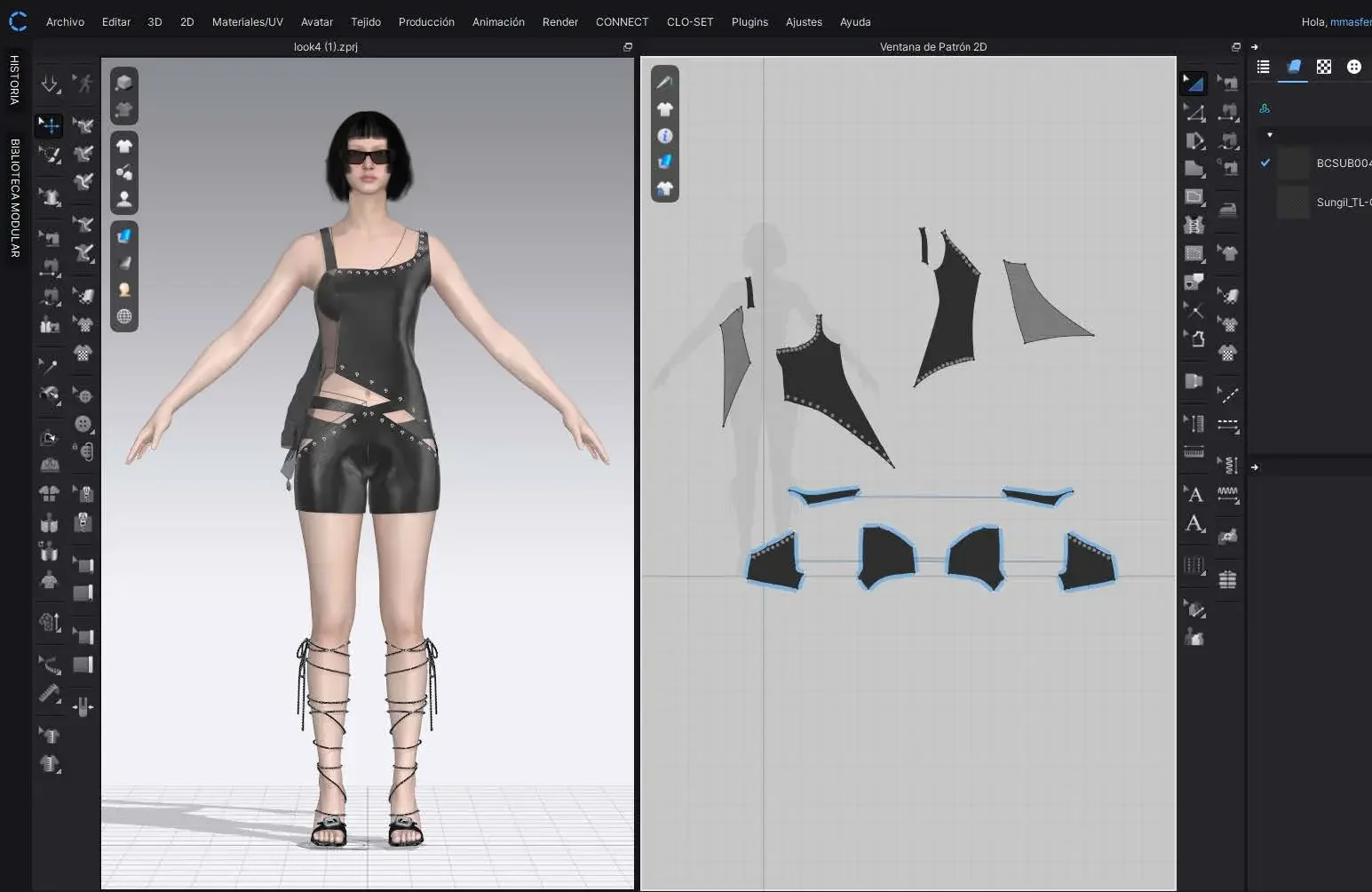
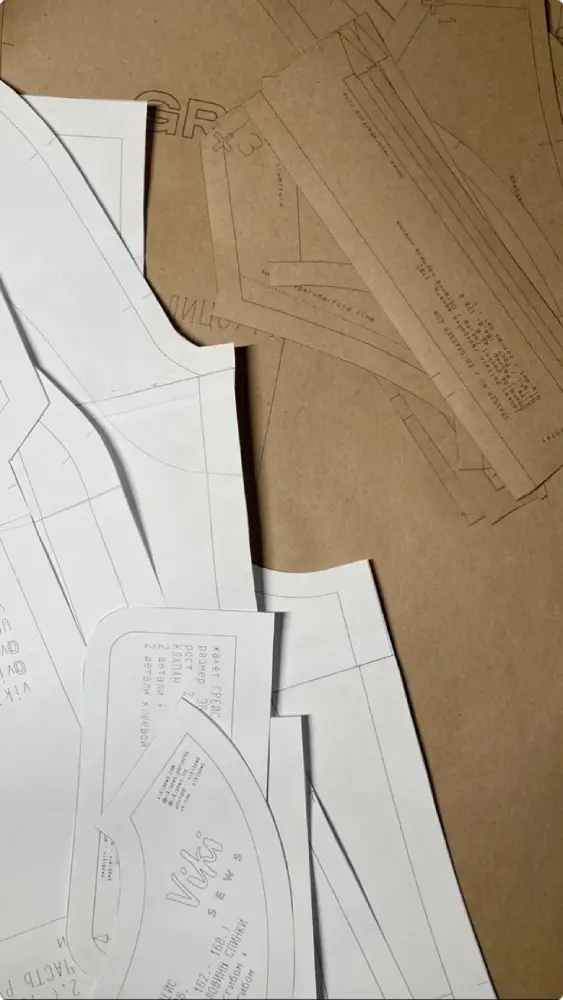
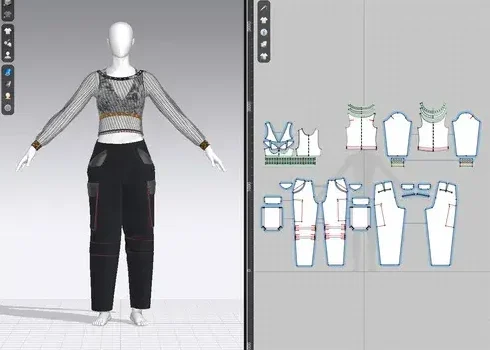
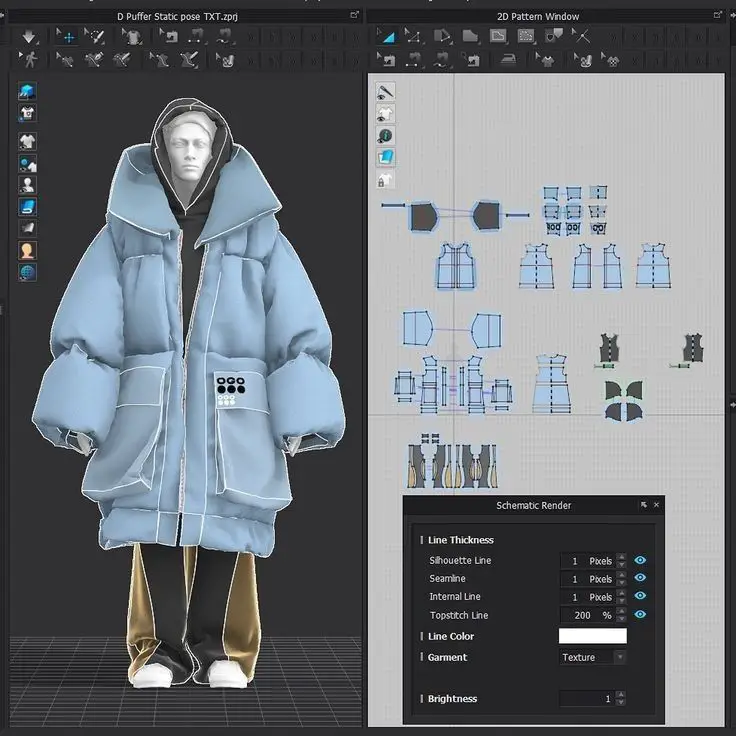
The Advanced Master’s in Industrial Digitalisation of Fashion at ESDI prepares you to develop garments using a digital process that connects pattern making, simulation, and production. You will learn to convert physical patterns into digital files, transform models, scale sizes, and check the fit in a virtual environment. You will work with GERBER AccuMark and CLO 3D to link design decisions with the technical requirements of each product and prepare the necessary technical information for its manufacture.
Through a hands-on methodology, you’ll progress from the initial pattern to the 3D prototype and the technical production dossier. Each module will provide exercises and results for your portfolio, as you incorporate materials, textures, colors, and finishes into garment development. Artificial intelligence is integrated to support exploration, analysis, and documentation, complementing your professional judgment in decision-making. The program culminates in the complete digitisation of a fashion design.
Key information
-
CERTIFICATION
ESDI Advanced Education’s own certificate. Private, non-university training without ECTS credits
-
PRICE
To be consulted
-
DURATION
225 hours, distributed between 2-3 days per week and 3-4 hours per day
-
MODE
In person at ESDI Sabadell (C/ Marquès de Comillas, 81-83, 08202 Sabadell, Barcelona)
-
NEXT CALL FOR APPLICATIONS
April 2027
-
LANGUAGE
Spanish
Curriculum
The eight modules follow the development of a garment: digitising the pattern, transforming it, preparing it for production, and validating its behaviour in 3D. AI is incorporated as a cross-cutting support tool, and the final project brings the entire process together in a comprehensive proposal.
-
M1. INTRODUCTION TO THE DIGITALISATION OF FASHION MODELS.
· Digital transformation of the fashion industry and product development cycle.
· From physical to digital pattern: relationship between 2D pattern making and 3D prototyping.
· Introduction to CAD systems, GERBER AccuMark and CLO 3D.
· Project organisation, formats, files and version control.
· Critical use of AI to support trend analysis, visual research, ideation, and briefs. -
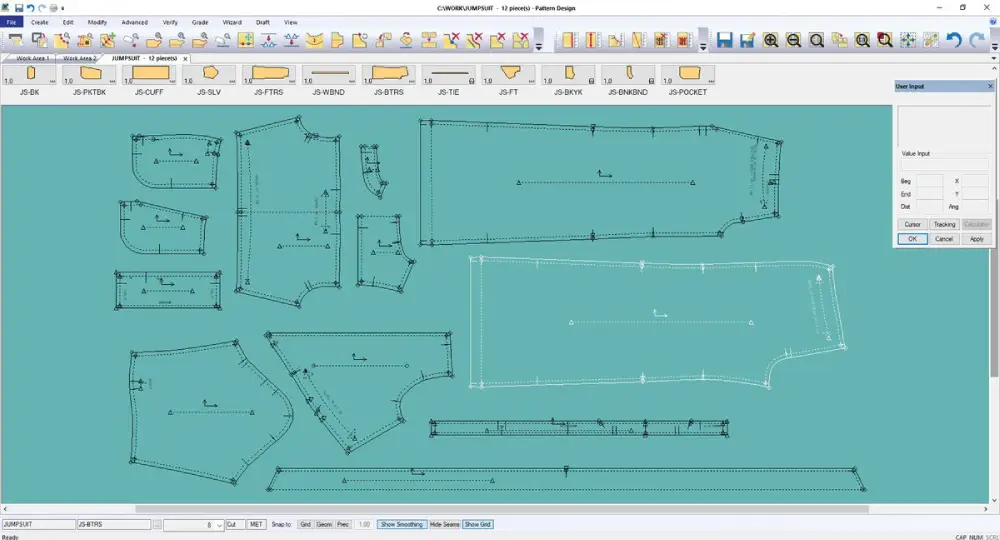
M2. DIGITISATION AND PATTERN CONSTRUCTION WITH GERBER ACCUMARK.
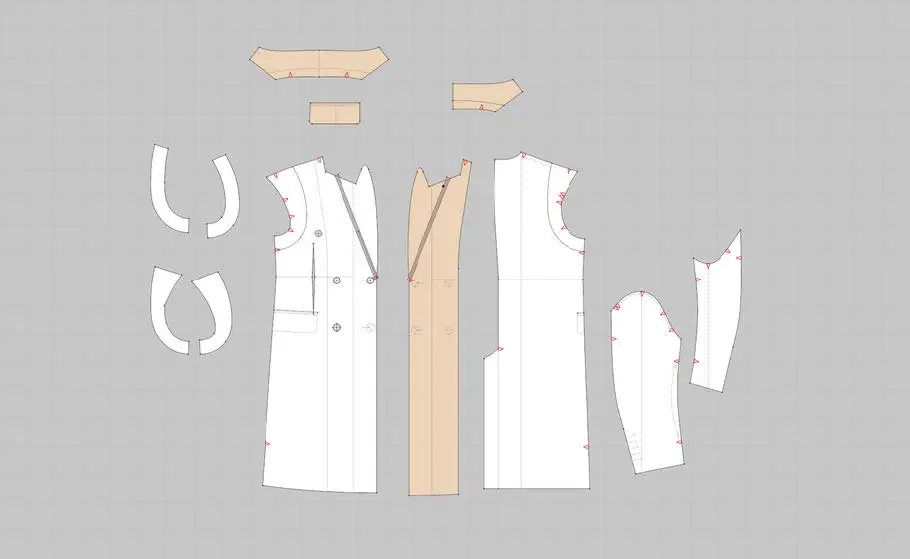
· Preparation and digitisation of physical patterns.
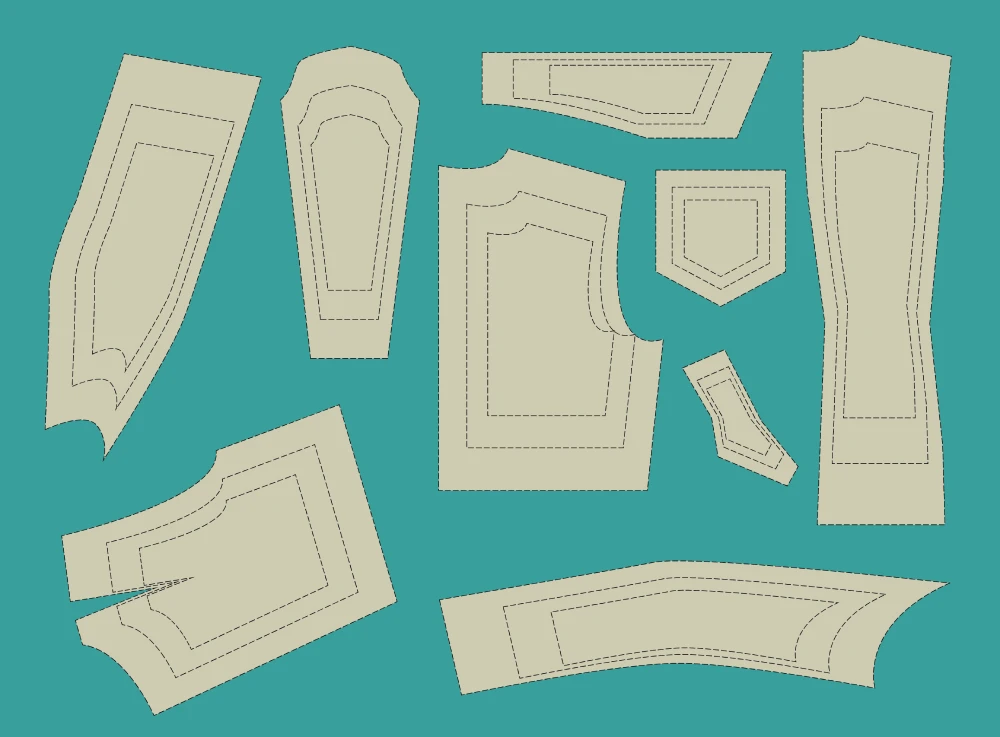
· Construction and editing of points, lines, curves and contours.
· Notches, references, internal lines, thread direction and seam allowances.
· Identification of parts, technical notes and management of AccuMark files.
· Quality control of the pattern and error correction.
· AI as support for the creation of checklists and technical documentation. -
M3. DIGITAL PATTERN MAKING AND MODEL TRANSFORMATION.
· Construction and adaptation of digital pattern making databases.
· Transformation of clamps, modification of volumes and symmetries.
· Division and joining of pieces, panels and cutting lines.
· Development of necklines, collars, sleeves, cuffs and pockets.
· Views, linings, complementary pieces and silhouette variations.
· AI as support for exploring design details and variations. -
M4. SCALING AND INDUSTRIALISATION OF THE PATTERN.
· Measurement charts and sizing systems.
· Points, rules and scaling increments.
· Scaling of parts and checking the consistency between sizes.
· Seam allowances, notches, grain direction and production information.
· Preparation of markings, distribution of pieces and optimisation of fabric consumption.
· AI as support for the analysis of measurements, inconsistencies and consumption. -
M5. 3D MODELING OF GARMENTS WITH CLO 3D.
· CLO 3D working environment and avatar configuration.
· Importing patterns and connecting 2D and 3D environments.
· Placement of pieces and virtual sewing.
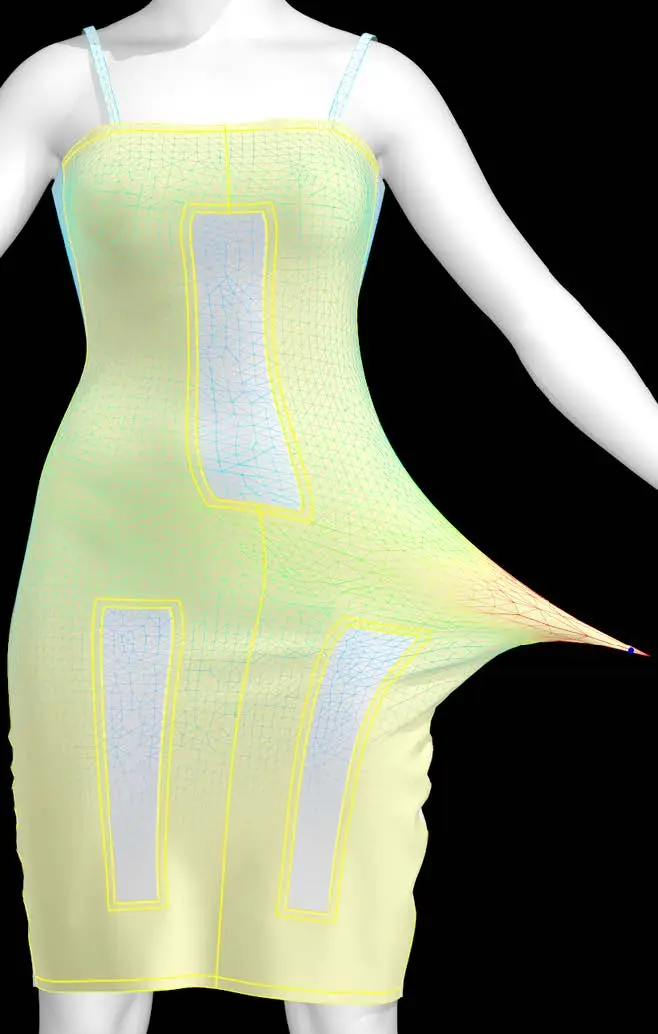
· Simulation of fit, volume, wrinkles, folds and tension.
· Correction of the pattern and verification through new simulations.
· Exploration of visual proposals, colors and patterns with AI support. -
M6. DIGITALISATION OF FABRICS, MATERIALS AND FINISHES.
· Physical properties of the fabric: weight, thickness, elasticity, stiffness, drape, flexibility and friction.
· Creation and configuration of digital materials from real samples.
· Application of textures, colors and patterns in CLO 3D.
· Incorporation of buttons, zippers and finishes.
· Comparison of the behavior of different materials on the same garment.
· AI as support for the exploration and comparison of materials and finishes. -
M7. VIRTUAL PROTOTYPING AND PRODUCT DEVELOPMENT.
· Virtual prototyping and digital validation before manufacturing.
· Analysis of the fit, stresses, deformations and corrections.
· Size validation and version comparison.
· Design variations, color combinations and materials.
· Renders, product presentation and technical and visual data sheets.
· Prototype iteration: simulate, diagnose, correct, and re-validate.
· AI as support for adjustment analysis and the organisation of corrections. -
M8. DIGITAL INTEGRATION AND PRODUCTION PREPARATION.
· Workflow between AccuMark and CLO 3D: import and export.
· File organisation, naming conventions, versions, and backups.
· Preparation of the final pattern, scaling and marking.
· Technical data sheets, production information and technical dossier.
· Digital traceability and coordination between design, pattern making and production.
· AI as support for descriptions, bills of materials, production instructions and change summaries. -
M9. FINAL PROJECT. COMPREHENSIVE DIGITISATION OF A FASHION MODEL.
· Definition of the model and analysis of the initial pattern.
· Digitisation, transformation, scaling and industrialization with AccuMark.
· Preparation of the marking and analysis of tissue consumption.
· Virtual fabrication, simulation and adjustment correction in CLO 3D.
· Application of materials, colors and finishes, and generation of renders.
· Preparation of technical data sheets, development dossier and final presentation.
· Documented application of AI in at least two phases, recording tools, instructions, results and professional validation.
Methodology
The programme is based on learning through practice. It combines technical demonstrations, guided exercises, independent work, and case studies to connect each tool to product development decisions.
The work is structured progressively around a product model or family. Each module generates a practical deliverable that allows you to document your skills and build your portfolio. Throughout the process, you will learn to review and validate the results of digital and AI tools using technical and professional criteria.
Career opportunities
Depending on your training and experience, you can focus your activity on functions related to:
-
Digital pattern making and model transformation
-
Scaling and industrialization of patterns
-
3D prototyping and virtual simulation of garments
-
Development and application of digital materials
-
Validation of fit and development of fashion product
-
Preparation of technical documentation for production
-
Integration of digital tools and AI in product development processes
The programme is aimed at pattern makers, fashion designers, product and collection development technicians, and garment industry professionals. It is also designed for textile industry professionals who want to update their skills and incorporate digital pattern making and 3D prototyping into their work.
Prior knowledge of pattern making, sewing, and digital tools is required. GERBER AccuMark and CLO 3D are taught gradually, so prior experience is not essential.
-
Develop a complete digital process, from the initial pattern to the documentation for production.
-
Digitise and transform patterns with GERBER AccuMark.
-
Apply scaling, industrialisation and optimisation of fabric consumption.
-
Build virtual prototypes and analyze the fit, volume and behaviour of garments with CLO 3D.
-
Representing materials, textures, colors, and finishes in digital environments.
-
Use virtual validation to reduce the need for physical prototypes.
-
Manage files, versions, and technical information to maintain development traceability.
-
Integrate AI to support work, evaluating its results with professional judgment.
Programme conceptualisation
-
DIRECTOR OF THE CREATE LAB

Graduate from ESDI with a degree in Textile and Fashion Design, and a Master’s in Digital Art Curating from ESDI-URL. She has completed courses in digital design and knitwear technology at Shima-Seiki and currently collaborates on various research projects for ESDI on new materials and color trends. She has coordinated the textile and garment-making vocational training programs and has been a teacher since the 1999-2000 academic year.
Coordination of the programme
-
PATTERN MAKER

Industrial pattern maker, specializing in garment construction and pattern making. Since 2016, she has worked as an assistant to the technical director at the Juan Carlos Grao design and pattern-making studio, undertaking projects for companies and creating custom-made collections and garments. A specialist in pattern making, grading, and digital design, she also works as a freelancer, producing technical and design documentation.
Request information
Do you have any questions? You can submit the form or contact us via WhatsApp, email, or phone.