
ADVANCED MASTER’S
AI ART DIRECTION AND AUDIOVISUAL PRODUCTION
Develop your visual judgement and creative direction skills to create audiovisual pieces and campaigns using generative artificial intelligence. Learn to maintain consistency across characters, styles and brand identities, coordinate creative processes and defend your decisions to clients.
Introduction
The Master’s in AI Art Direction and Generative Audiovisual Production at ESDI Advanced Education prepares you to conceive and direct projects that combine image, video 3D and sound using artificial intelligence. You will learn to define a creative vision, translate it into production processes, and maintain a consistent visual identity across characters, styles, formats and pieces. This specialisation will strengthen your artistic judgement, help you meet brand objectives and provide a solid foundation for your decisions when presenting to clients and teams.
The programme integrates visual language, prompt and context engineering, character consistency, audiovisual storytelling and creative direction. Through exercises, iterations and critical reviews, you will work on selecting results, coordinating processes with AI and integrating visual and sound assets. You will also address intellectual property, traceability and best practices. The master’s culminates in a real-world project in which you will direct a creative piece or campaign and present and justify your creative decisions.
Key information
-
CERTIFICATION
ESDI Advanced Education’s own certificate. Private, non-university training without ECTS credits
-
PRICE
€9,300€8,900 if you book your place before 31/12/2026
-
DURATION
225 hours, distributed between 2-3 days per week and 3-4 hours per day
-
MODE
Blended learning: Face-to-face classes at ESDI Sabadell + one online session per week
-
NEXT CALL FOR APPLICATIONS
April 2027
-
LANGUAGE
Spanish
Curriculum
The curriculum explores the decisions that shape a generative audiovisual production: concept, visual identity, image, movement, space and sound. Each module incorporates directing tools and criteria that are integrated into a final project for a company, studio, production company or brand.
-
M1. FUNDAMENTALS OF ART DIRECTION AND VISUAL LANGUAGE.
· Image, aesthetics and composition.
· Color, lighting and visual storytelling.
· Analysis of references and visual culture.
· Creation of mood boards and art direction proposals.
· Development of aesthetic criteria to guide production. -
M2. PROMPT AND CONTEXT ENGINEERING FOR VISUAL DIRECTION.
· Translation of creative intentions into instructions for generative systems.
· Prompt and context engineering for text, image, video and audio.
· Complex structures and reusable prompt libraries.
· Iteration, comparison and control of results, with reproducibility criteria.
· Work with Freepik and multimodal generators. -
M3. CONSISTENCY, CHARACTERS AND VISUAL IDENTITY AT SCALE.
· Consistency across characters, styles, lighting and visual identity.
· LoRAs and references for style control.
· Style guides for AI-generated productions.
· Control of aesthetic variations across pieces and formats.
· ComfyUI workflows for developing consistent visual systems.
· Testing and reviewing consistency across multiple assets and applications. -
M4. CREATIVE DIRECTION AND AI-ASSISTED IDEATION.
· Generation, selection and evaluation of concepts.
· Developing narratives and visual worlds.
· Dynamic mood boards.
· Creative processes that combine human judgement and generative tools.
· Facilitating and leading creative sessions. -
M5. GENERATING AND DIRECTING OF MOVING IMAGES.
· Generating video from text, image and 3D assets.
· Narrative and visual consistency across audiovisual productions.
· Developing of AI-assisted treatments and storyboards.
· Direction of camera movement.
· Rhythm, material selection and assembly.
· Iterative production of a short audiovisual work. -
M6. 3D, SPACE AND HYBRID INTEGRATION.
· 3D fundamentals applied to art direction.
· Basic modeling, topology and space construction.
· 3D camera and lighting.
· Blender and AI-powered 3D generation tools.
· Integration of 2D, 3D and video assets.
· Creating virtual environments and locations. -
M7. SOUND DESIGN AND GENERATIVE MUSIC FOR DIRECTION.
· Sound design and soundscape creation.
· AI-assisted generation and direction of music and voice.
· Synchronising sound with visuals.
· Creating sonic atmospheres and sound identities.
· Integrating sound into the overall creative direction of the audiovisual work. -
M8. ETHICS, INTELLECTUAL PROPERTY, PROVENANCE AND BEST PRACTICE.
· Copyright and intellectual property rights.
· AI Act and professional responsibility.
· Content transparency and provenance.
· Metadata, traceability and watermarks.
· Algorithmic bias and criteria for responsible use.
· Professional best practice when working with clients and brands. -
M9. INTEGRATIVE PROJECT WITH COMPANY OR STUDIO.
· Analysis of a real-world project brief.
· Defining the project’s creative direction and objectives.
· Planning and producing a cohesive audiovisual piece or campaign.
· Integrating image, motion, 3D and sound.
· Tutorial sessions, reviews and preparation of the final submission.
· Presentation and defence before an academic and external professional jury.
Methodology
Each module begins with a creative vision or an art direction challenge. It combines visual reference analysis, process demonstrations, guided practice and critical review, helping you learn to develop, compare and select outputs. Iterative work is guided by specific objectives, taking into account visual consistency, client needs and production constraints.
You will also learn how to coordinate workflows involving creative teams and AI tools and how to justify the decisions that shape the project. The final project takes the form of a real-world brief developed in collaboration with a company or studio, with tutorial sessions throughout the process and a final presentation in which you will present and justify your art direction and the results.
Career opportunities
Depending on your background, experience and interests, this specialisation can lead to roles such as:
-
Art Director specialising in generative AI or AI Art Director
-
Creative director of generative audiovisual projects
-
Creative Technologist
-
AI Designer
-
Generative Artist
-
AI Filmmaker
-
Motion Designer specialising in generative AI
-
Brand Visual Lead
-
Concept Designer
The programme is aimed at creative professionals who want to incorporate generative AI into their creative direction and production workflows. It is especially designed for professionals in design, art direction, photography, audiovisual communication and production who seek to develop projects with a consistent visual identity and a clear client focus.
A prior background in these areas or other creative disciplines is recommended. To participate in the practical work, proficiency in Adobe Creative Cloud tools such as Photoshop, Illustrator or Premiere is expected, along with comfort in digital environments and the ability to work from a brief.
-
Develop aesthetic judgement and art direction skills.
-
Translate creative intentions into controllable, repeatable and reproducible generative processes.
-
Maintain consistency across characters, styles and visual identities in different formats.
-
Conceive and direct audiovisual projects through storytelling, storyboarding, movement and pacing.
-
Integrate 2D image, 3D, video and sound into a creative proposal.
-
Coordinate processes that combine creative teams and generative tools.
-
Apply principles of intellectual property, transparency, provenance and professional responsibility.
-
Develop a real-world project and present and justify creative decisions to clients and industry professionals.
Programme overview
-
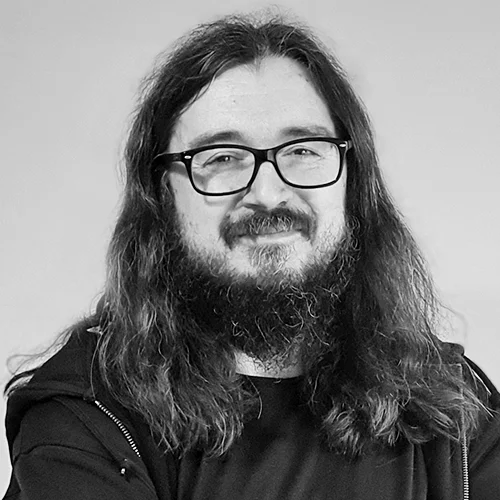
He studied Photography at the IEFC in Barcelona, a Postgraduate degree in Photography and CGI from the CITM, a Master’s degree in Animation and 3D Art from the UPC, and has taken courses in ZBrush and Houdini. He has over 15 years of experience working as a 3D generalist in various fields and as a lecturer in 3D modeling, texturing, rigging, rendering, and procedural development at both advanced vocational training and undergraduate levels in several institutions.
Request information
Do you have any questions? You can submit the form or contact us via WhatsApp, email or phone.