
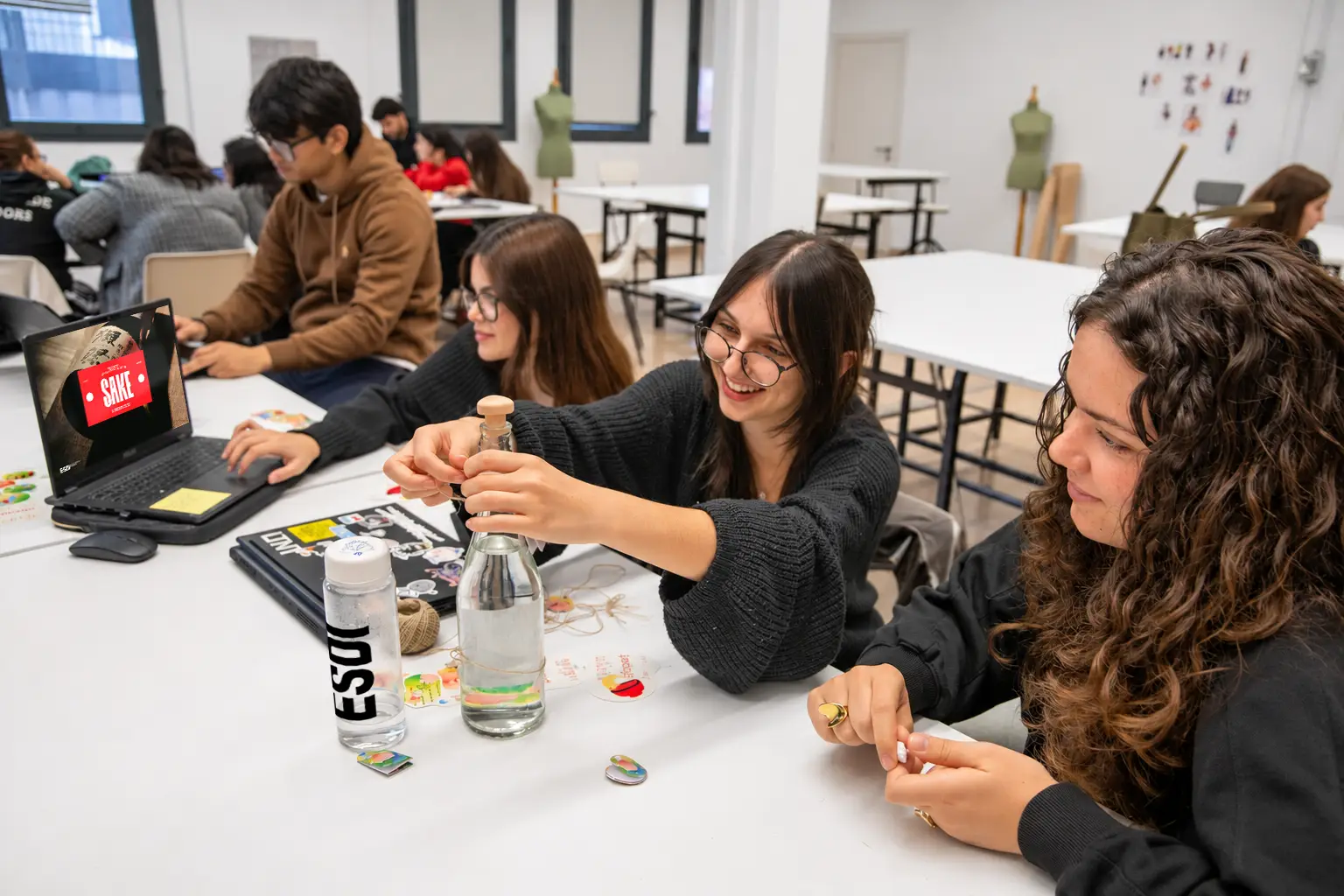
ESDI students present a project at Manga Barcelona in collaboration with the Consulate of Japan that reinterprets the universe of sake from a contemporary design perspective.
The project stems from a direct collaboration between ESDI and the Consulate General of Japan in Barcelona, with the aim of exploring new ways of interpreting the world of sake and establishing a dialogue between Japanese tradition and the contemporary sensibilities of the local public.
A project that begins with research and expert knowledge
The challenge presented to the students goes far beyond designing a new image for a beverage. The launch of the SAKE Project included an institutional reception at ESDI and a masterclass session Roger Ortuño Flamerich, sake specialist and creator of Eating JapaneseThis workshop introduced students to the culture, rituals, codes, and visual world surrounding this traditional Japanese beverage. It allowed them to understand sake beyond its role as a product and provided the necessary cultural insights to approach the challenge from a well-informed perspective.
Organized into teams of three and mentored by Sergi Marot and Pep Serra, the students researched the cultural codes, rituals, and habits associated with sake consumption to design beyond the purely aesthetic. Throughout the process, they developed various elements related to the product, from labeling and packaging to serving utensils and accessories. The goal was not to create a direct visual fusion between Japan and Catalonia, but rather to reinterpret this tradition, adapting it to the needs of the local market through a deep understanding of both cultures.
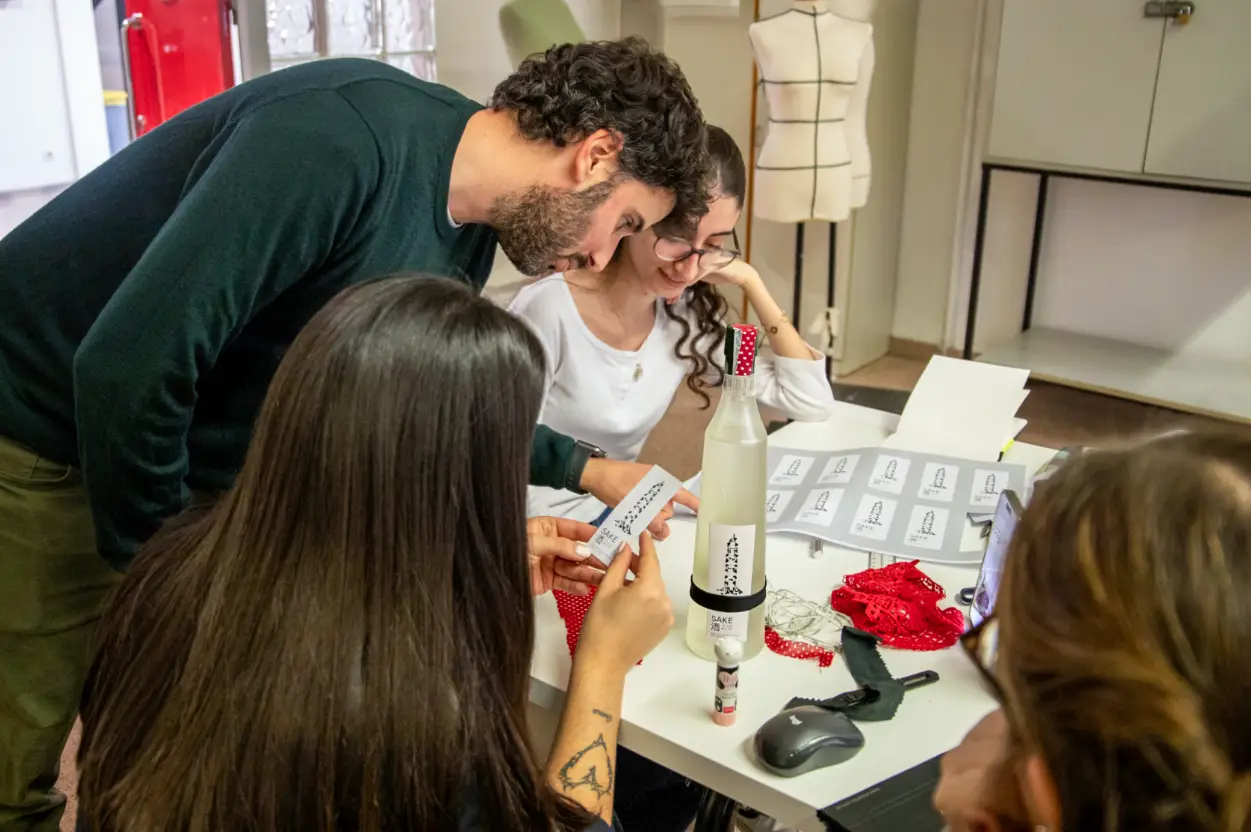
How can the Japanese tradition of sake be connected to Catalan culture through design?
The SAKE Project, coordinated by David Pablo and Ismael Navales, with Sandra Rodríguez and Marta Gil as assistants, was structured around three conceptual axes that guided the creative process: tradition and contemporaneity, craftsmanship and innovation, and Japanese culture and the young creative perspective of Catalonia. These three tensions open new possibilities for exploring how design can connect different cultural contexts without losing sight of the identity and meaning of the objects.
After an intense process of work and brainstorming, the five resulting projects have been announced. Five unique initiatives that demonstrate the power of combining talent and creativity. Here’s a sneak peek at the presentations that will be shown at the 32nd Barcelona Manga Fair:
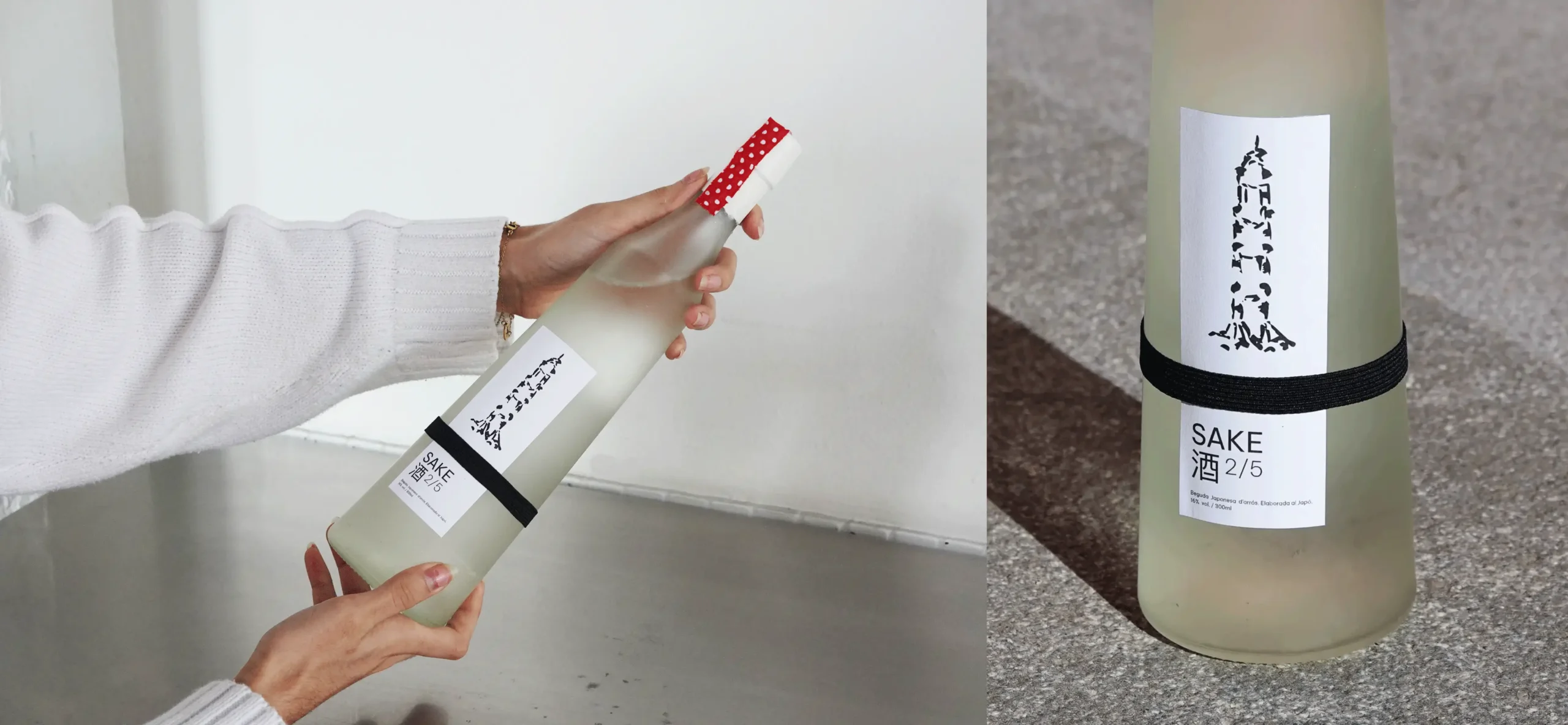
酒 2/5: dialogue between Japanese culture and the casteller tradition through design.
AINA COMAS · ELSA GARCÍA · NATALIA SERRANO · NASTYA ARXÉ
The project’s starting point is a formal and symbolic connection: the verticality present both in Japanese characters (kanji) and in human constructions. castellersTwo cultural expressions that, despite their differences, share a visual representation based on overlapping, balance, and vertical growth. This inspiration also extends to the packaging design: a minimalist bottle that combines a white label with black details, a black ribbon reminiscent of the sash castellera and a red seal with white polka dots that refers to the traditional textile elements of casteller clothing, and in turn, makes a nod to the Japanese artist Yayoi Kusama.
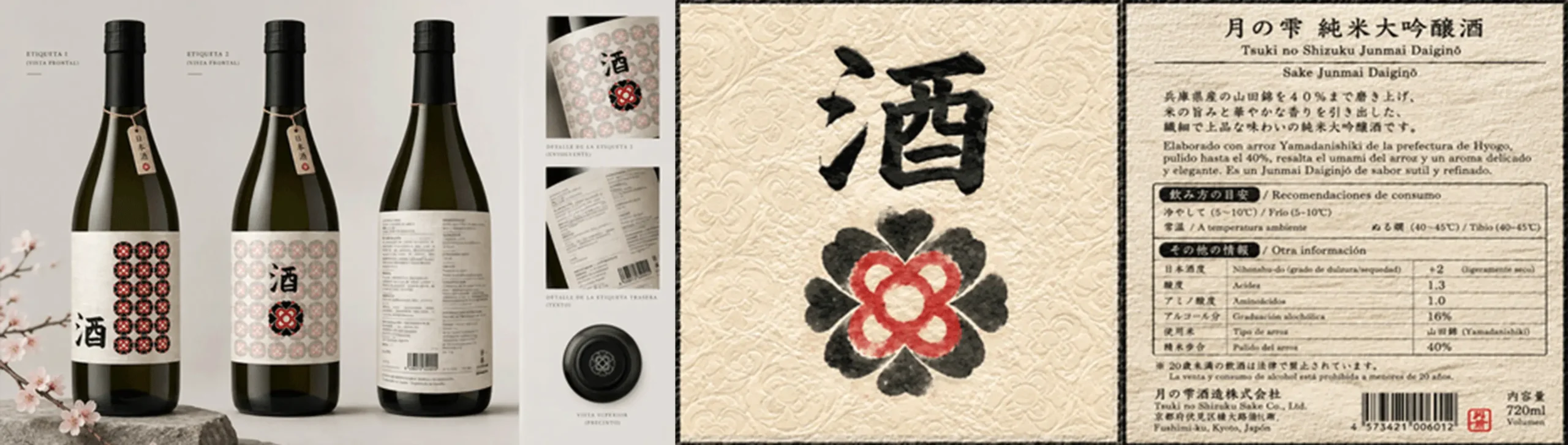
DOS TERRES: construction of a visual identity that connects Japan and Barcelona through elements of the Barcelona urban landscape, reinterpreted through visual codes of Japanese inspiration.
CARLA CARMONA · DARIA PATASANU · ABRIL CARRERA · IVETTE MURCIA
To begin, the students took inspiration from the tiles of Barcelona’s urban landscape. They combined this element with recognizable icons of Japanese culture, such as the cherry blossom, traditional umbrellas, and its color palette. From this fusion, Dos Terres (Two Lands) was born. The name evokes the union of two places and plays on the concept of ground, in direct reference to Barcelona’s tiles. The proposal materialized in the design of a sake bottle with a wraparound label that functions as a continuous graphic system. On the front, the Japanese kanji 酒, which identifies sake, coexists with the floral symbol developed by the students, while the back displays the product information. The design is completed with hanging tags on the neck of the bottle. These pieces identify the different sake varieties through different color variations of the graphic motif.
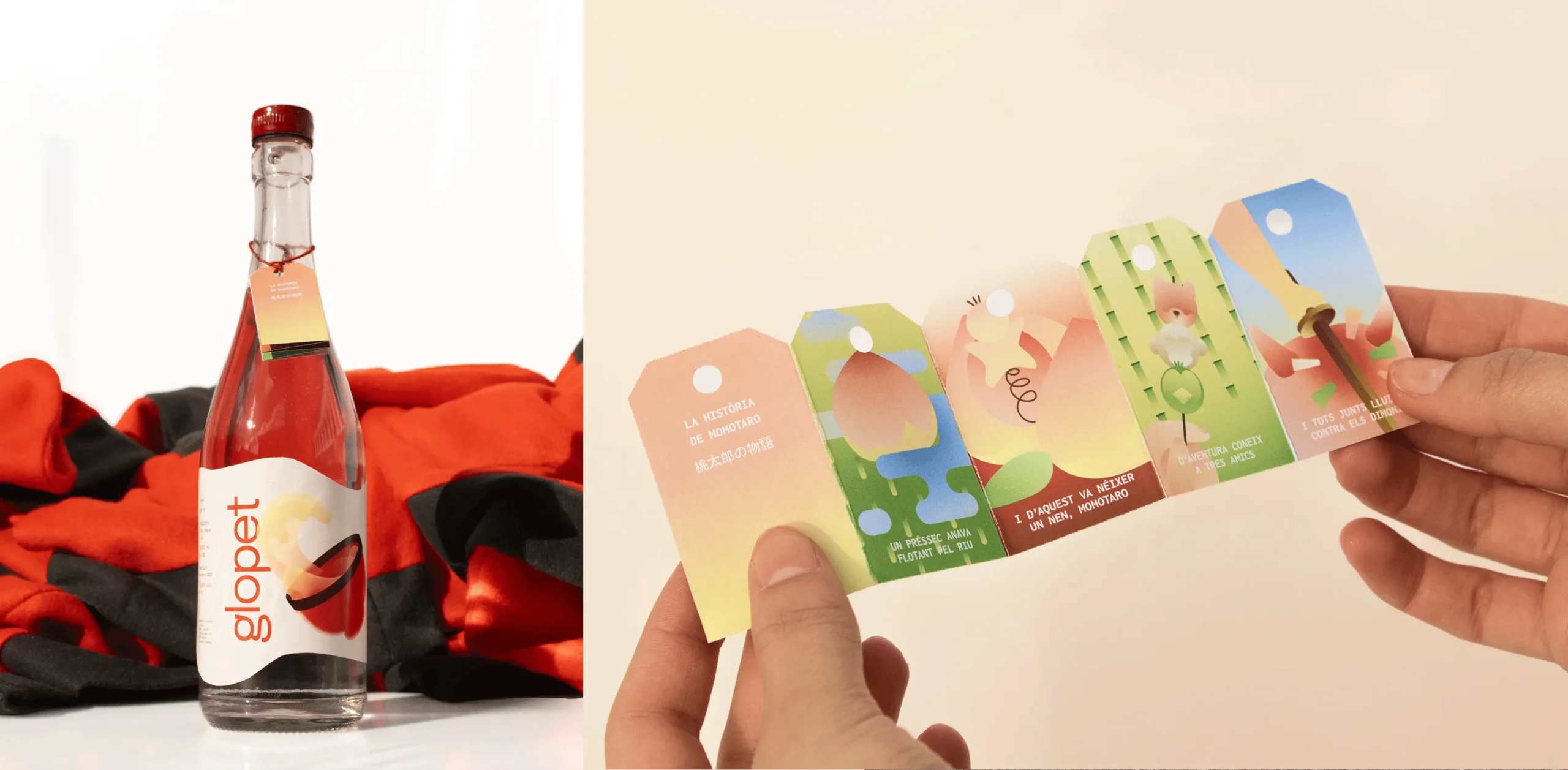
Glopet: Catalan sake.
NOELIA GUSMÁN · MIRIAM GARCÍA · TANIA GARCÍA · AJAY GAHAN
In this project, the most distinctive aspect is the creation of a Catalan sake concept based on the convergence of two folk tales: En Patufet, from Catalan tradition, and Momotarō, a traditional Japanese folktale. These two folk tales, despite originating from different cultural contexts, share narrative and symbolic elements. These points of connection are what this group of students has used as a guiding thread to construct a common graphic universe.
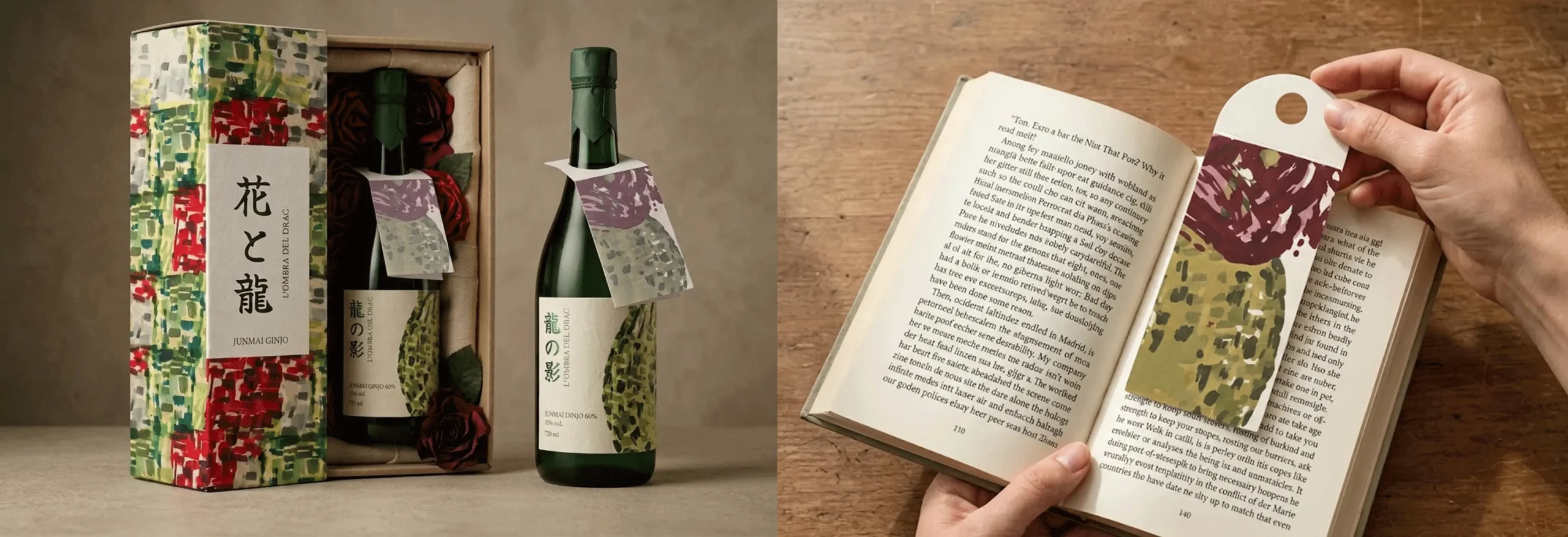
The flower and the dragon: fusion of two great mythological stories, the Catalan legend of Sant Jordi and the Japanese myth of Susanoo and the eight-headed serpent.
FOIX BENEDICTO · SARA MORENO · MARIONA VILLANUEVA
From this intersection emerge three symbolic parallels—the rose and the sakura flower, the hero and the deity, the dragon and the serpent—that give shape to an exclusive collection of three sake bottles:
The Dream of Flowers (Junmai Daiginjo) • The Shadow of the Dragon (Junmai Ginjo) • The Heart of Courage (Tokubetsu Junmai). The brand experience is completed with a system of meticulously designed secondary elements: foldable neckbands that narrate both legends in Catalan and Japanese and can be used as bookmarks—a direct nod to the literary tradition of Saint George—and a special edition presentation box decorated with floral motifs and roses inside that serve as protection for the bottles.
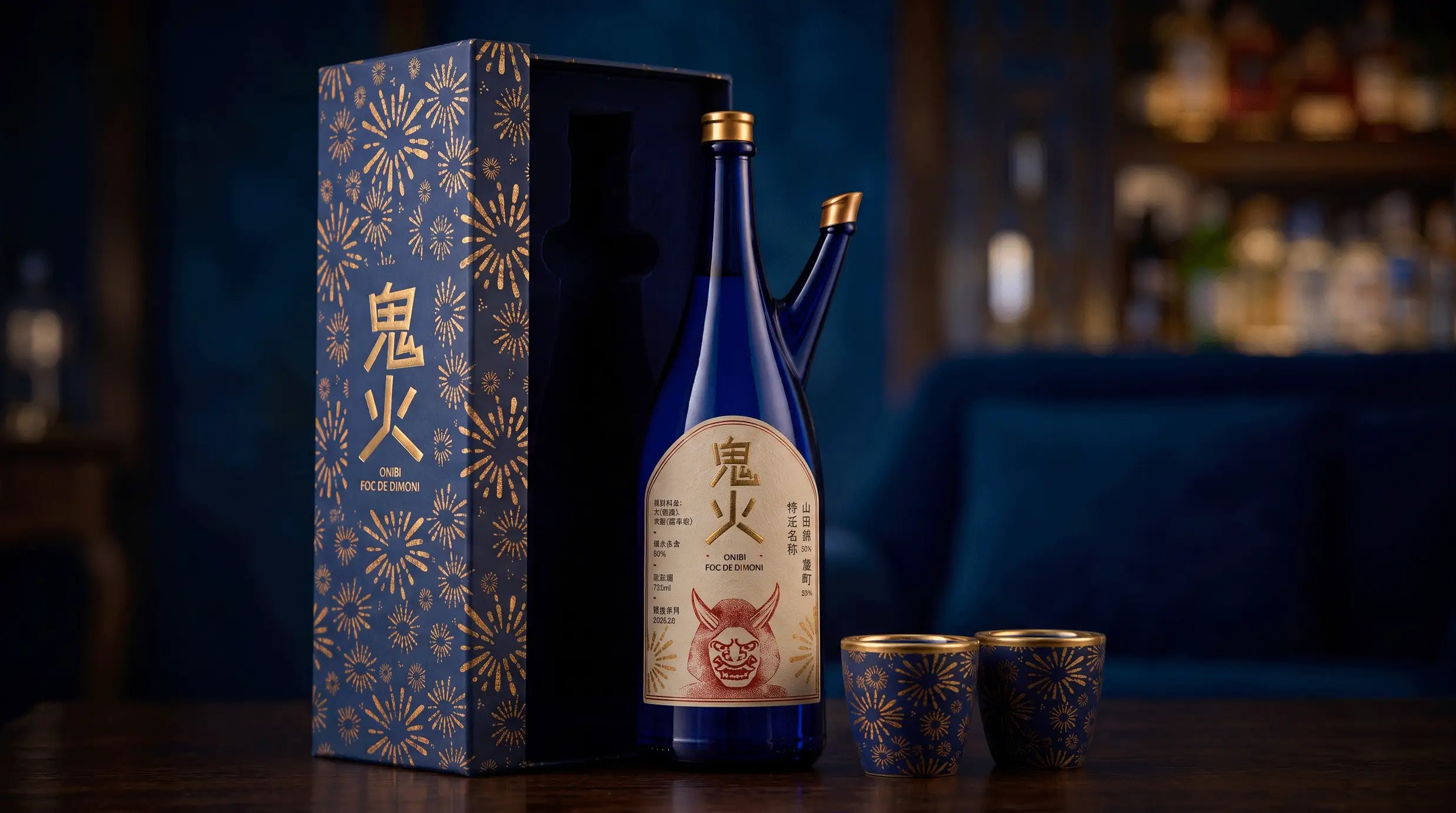
Onibi (鬼火): fusion of the tradition of correfocs and the figure of the Catalan Dimoni with that of the Japanese Oni.
NEREA ARCHILES · MAR JIMÉNES · ALISSON PAZOS · MÓNICA GARCÍA
The initial idea is the parallel between two festive and mythological icons united by fire: the Demons Catalan —protagonist of the correfocs—and the Oni, the emblematic demon of Japanese folklore. The centerpiece of the project is a cobalt blue glass bottle, with a hybrid design combining elements of the Catalan porrón and the Japanese bottle, creating a functional object intended for sharing and toasting in a group. For the label’s graphic design, the student team opted for a handcrafted aesthetic using engraving and stamping techniques. The project is completed with a rigid case decorated with pyrotechnic motifs in gold and matching tasting glasses.
Design as a bridge between cultures and new perspectives
The SAKE Project demonstrates that design also involves learning to see things from different perspectives. It consists of understanding a tradition in order to reinterpret it and bring it closer to new audiences without losing its essence.
With initiatives like this, ESDI reinforces its commitment to education connected to the professional and institutional environment. In this approach, design goes beyond a simple creative discipline. It also functions as a tool for research and forging connections. In this way, it allows us to propose new ways of relating to the products and cultures that surround us.
From the classroom to Manga Barcelona
The presentation of the SAKE Project at Manga Barcelona brings ESDI’s creative work to the public. It also highlights design as a space for cultural exchange. This event showcases a learning experience based on a real-world commission. The students collaborated with an international institution, using a specific cultural context as their foundation.
During the event, the students will explain their projects to the public. They will share how they have approached the dialogue between tradition and contemporary art, as well as between craftsmanship and innovation. Their proposals stem from the cultural context of sake and are adapted to the Catalan audience. Finally, the activity will include a tasting of different sakes. This tasting will allow participants to discover their nuances and styles from a cultural, sensory, and design-related perspective.
More information about the presentation:
-Session: Sake between two worlds: design, tradition and tasting
-Organized by: Consulate General of Japan in Barcelona, FICOMIC and ComerJapones
-Date and time: December 7, 2026 from 11:00 a.m. to 12:00 p.m.
-Location: Nihon Ryori, Fira Barcelona Gran Via (gate 4)