
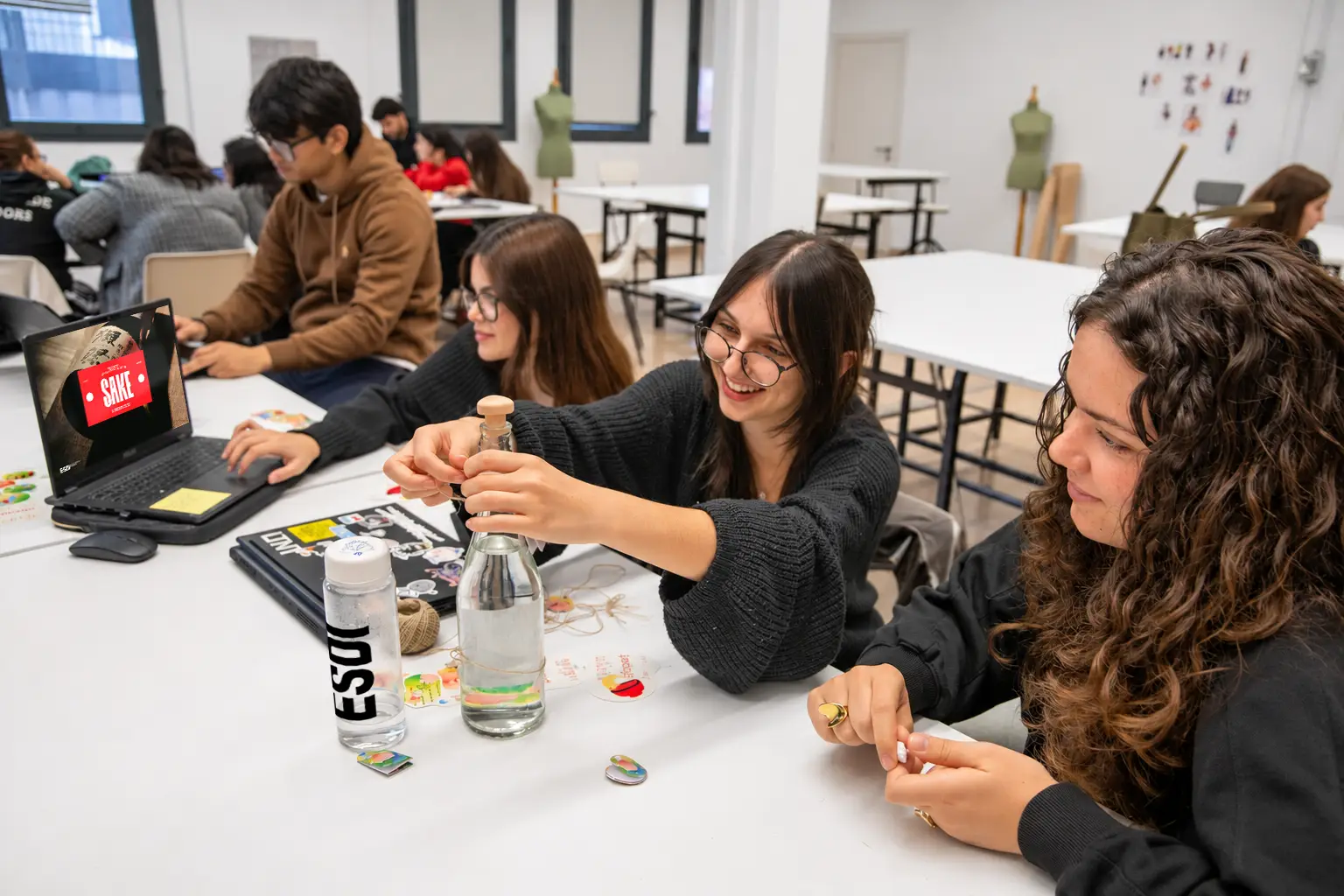
ESDI students present a project at Manga Barcelona in collaboration with the Consulate of Japan that reinterprets the world of sake from a contemporary design perspective.
The project is the result of a collaboration between ESDI and the Consulate General of Japan in Barcelona, with the aim of exploring new ways of exploring the world of sake and establishing a dialogue between Japanese tradition and the contemporary tastes and sensibilities of local audiences.
A project rooted in research and expert insight
The challenge set for the students goes far beyond creating a new visual identity for a drink. The launch of the SAKE Project included an official reception at ESDI and a masterclass by Roger Ortuño Flamerich, sake expert and founder of Comer Japones, which introduced students to the culture, rituals, customs and visual culture surrounding this traditional Japanese drink. The session helped students understand sake beyond its identity as a product, equipping them with the cultural knowledge they needed to approach the challenge.
Organised into teams of three and supervised by Sergi Marot and Pep Serra, the students researched the cultural conventions, rituals and customs surrounding the consumption of sake, developing design proposals that went beyond aesthetics alone. Throughout the process, they developed a range of elements associated with the product, from labelling and packaging to serving objects and accessories. The aim was not to create a straightforward visual fusion between Japan and Catalonia, but rather to reinterpret this tradition and adapt it to the needs of the local market, grounded in an in-depth understanding of both cultures.
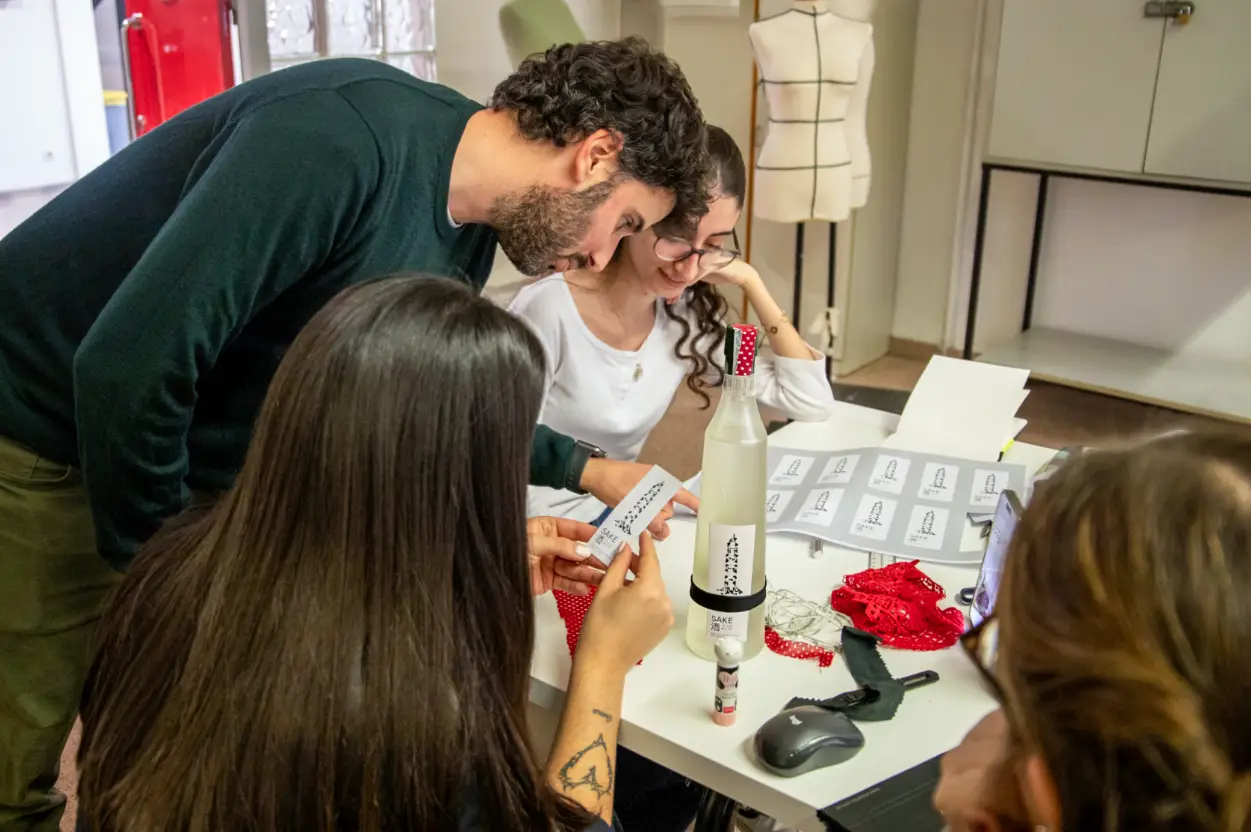
How can the Japanese tradition of sake be connected to Catalan culture through design?
The SAKE Project, coordinated by David Pablo and Ismael Navales, with Sandra Rodríguez and Marta Gil providing support, was built around three key conceptual themes that guided the creative process: tradition and contemporary design, craftsmanship and innovation, and Japanese culture and the fresh creative perspective of a new generation in Catalonia. These three themes offer new possibilities for exploring how design can connect different cultural contexts without losing sight of the identity and significance of objects.
Following an intensive process of collaboration and brainstorming, the five resulting projects have now been announced. Five unique initiatives that demonstrate the power of bringing together talent and creativity. Here is a brief preview of the presentations that will be on show at the 32nd Barcelona Manga Fair:
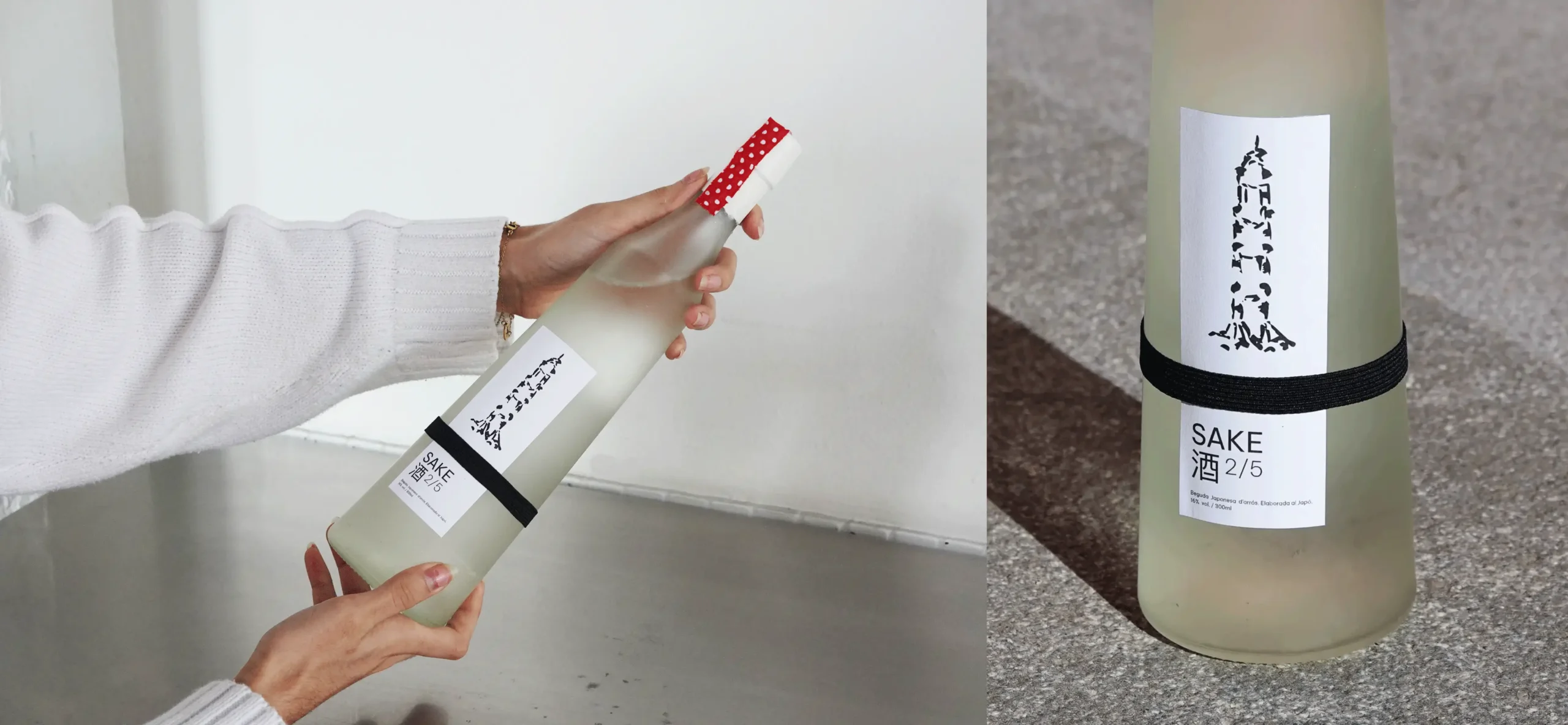
酒 2/5: dialogue between Japanese culture and the casteller tradition through design.
AINA COMAS · ELSA GARCÍA · NATALIA SERRANO · NASTYA ARXÉ
The project’s starting point is a formal and symbolic connection: the verticality present both in Japanese characters (kanji) and in the castellers human constructions. Two cultural expressions that, despite their differences, share a visual representation based on overlapping, balance, and vertical growth. This inspiration also extends to the packaging design: a minimalist bottle that combines a white label with black details, a black ribbon reminiscent of the castellera sash and a red seal with white polka dots that refers to the traditional textile elements of casteller clothing, and in turn, pays homage to the Japanese artist Yayoi Kusama.
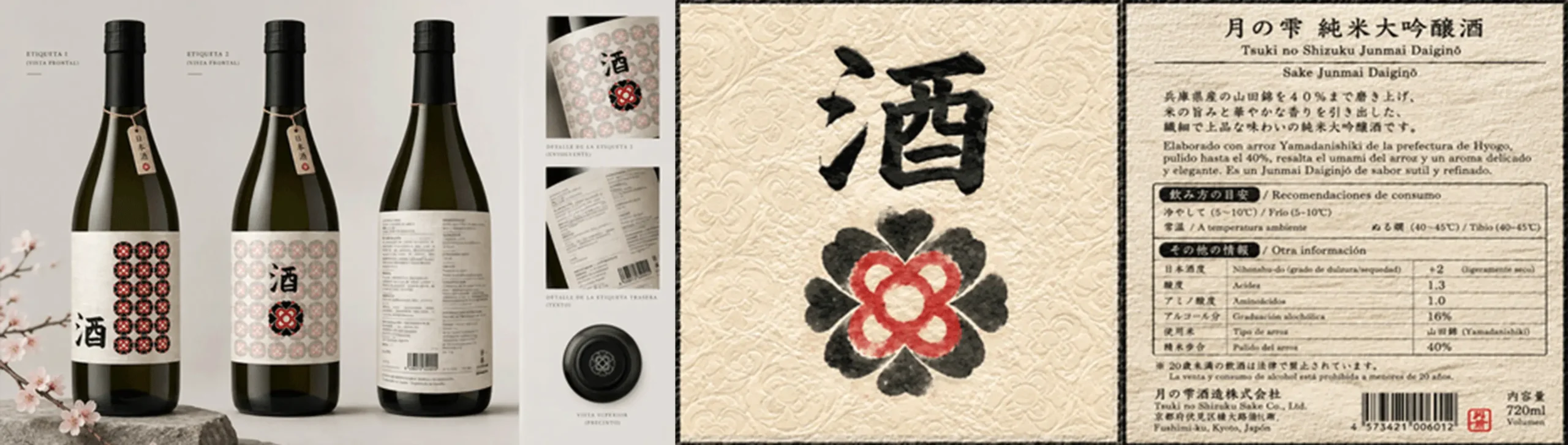
酒 DOS TERRES (TWO LANDS): construction of a visual identity that connects Japan and Barcelona through elements of the Barcelona urban landscape, reinterpreted through visual codes of Japanese inspiration.
CARLA CARMONA · DARIA PATASANU · ABRIL CARRERA · IVETTE MURCIA
To begin, the students took inspiration from the tiles of Barcelona’s urban landscape. They combined this element with recognisable icons of Japanese culture, such as the cherry blossoms, traditional umbrellas, and Japanese-inspired colour palette. From this fusion, Dos Terres was born. The name evokes the union of two places and plays on the concept of ground, in direct reference to Barcelona’s paving tiles. The proposal materialized in the design of a sake bottle with a wraparound label that acts as a continuous graphic system. On the front, the Japanese kanji 酒, which identifies sake, sits alongside the floral symbol developed by the students, while the back displays the product information. The design is completed with hanging tags on the neck of the bottle. These pieces distinguish the different sake varieties through different colour variations of the graphic motif.
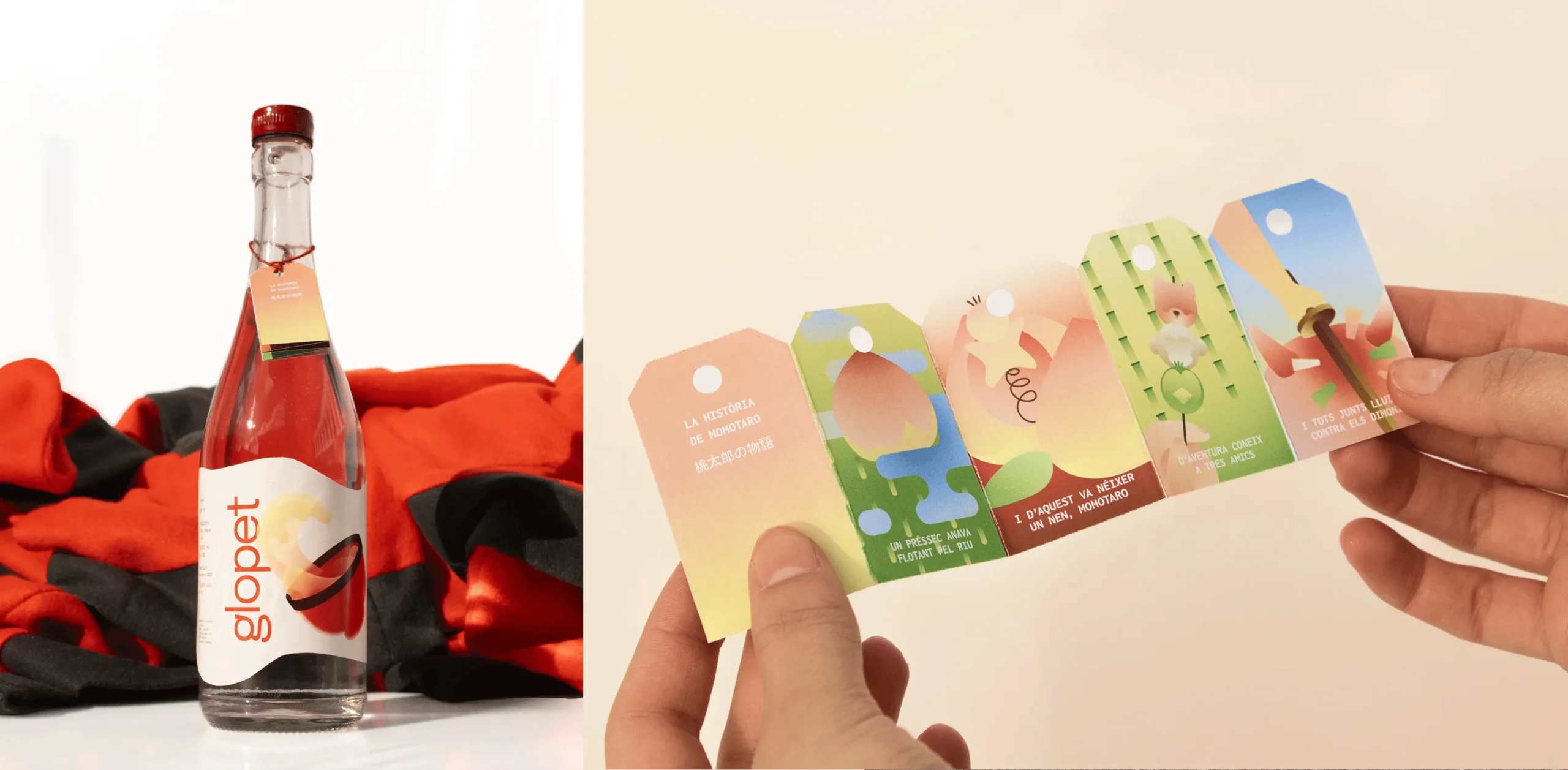
Glopet (a little sip): Catalan sake.
NOELIA GUSMÁN · MIRIAM GARCÍA · TANIA GARCÍA · AJAY GAHAN
The most distinctive aspect of this project is the creation of a Catalan sake concept built around the meeting of two folk tales: En Patufet, from Catalan folklore, and Momotarō, a traditional Japanese folktale. Despite originating in different cultural contexts, the two stories share narrative and symbolic elements. The students have used these common threads as the starting point for creating a shared graphic universe.
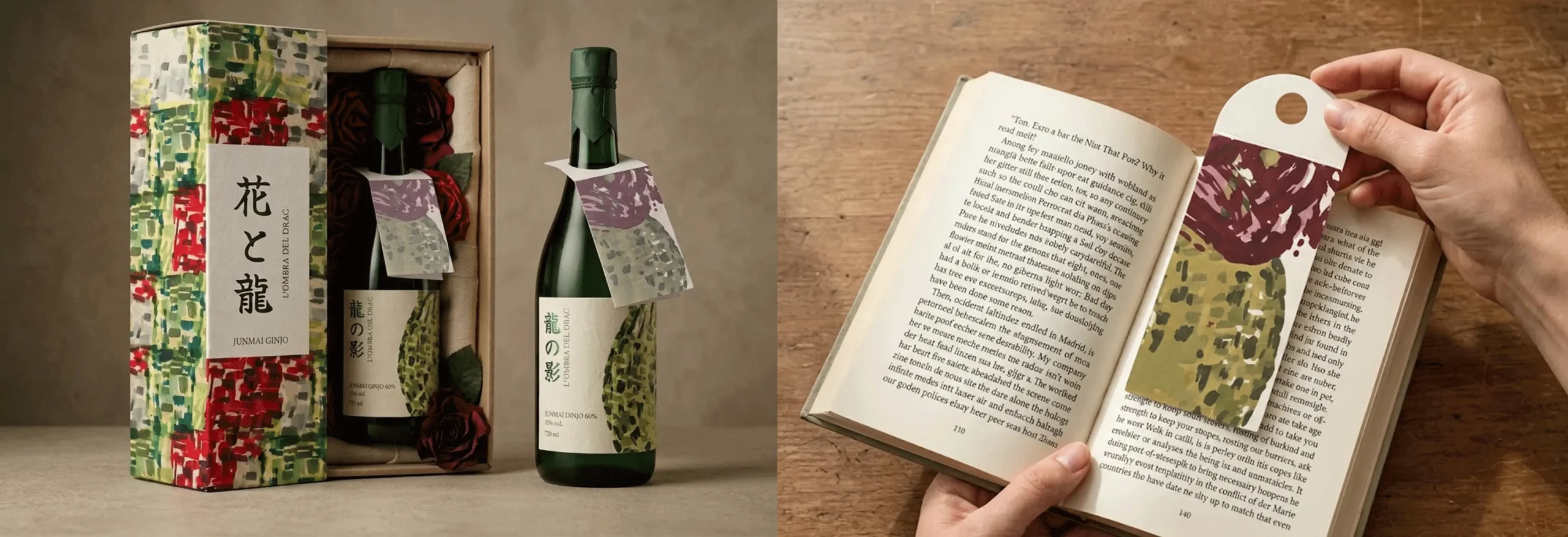
花と龍 The Flower and the Dragon: fusion of two great mythological tales, the Catalan legend of Sant Jordi and the Japanese myth of Susanoo and the eight-headed serpent.
FOIX BENEDICTO · SARA MORENO · MARIONA VILLANUEVA
Three symbolic parallels emerge from this encounter—the rose and the cherry blossom, the hero and the deity, and the dragon and the serpent—shaping an exclusive collection of three sake bottles:
El somni de les flors (Junmai Daiginjo) • L’ombra del drac (Junmai Ginjo) • El cor del valor (Tokubetsu Junmai). The brand experience is further enhanced by a carefully designed range of complementary elements: foldable bottle-neck tags that tell both legends in Catalan and Japanese and can also be used as bookmarks—a direct nod to the literary tradition associated with Sant Jordi—as well as a special-edition presentation box decorated with floral motifs and featuring roses inside to protect the bottles.
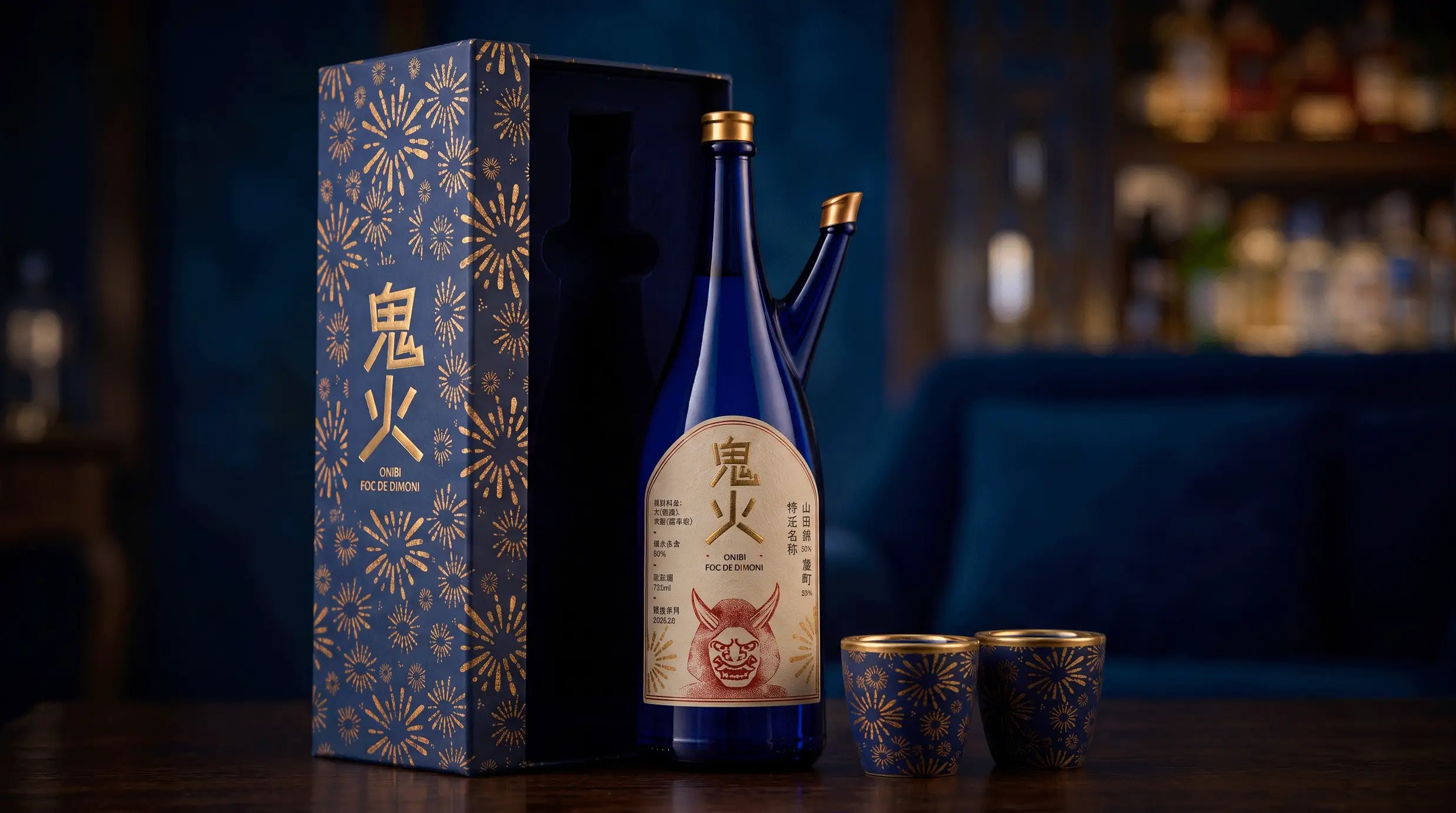
Onibi (鬼火): fusion of the tradition of correfocs and the figure of the Catalan Dimoni with that of the Japanese Oni.
NEREA ARCHILES · MAR JIMÉNES · ALISSON PAZOS · MÓNICA GARCÍA
The project is rooted in the parallels between two festive and mythological figures brought together by fire: the Catalan Dimoni —a central figure in correfocs—and the Oni, the iconic demon of Japanese folklore. The centrepiece of the project is a cobalt-blue glass bottle featuring a hybrid design that combines elements of the traditional Catalan porrón and Japanese bottles. The result is a functional object designed for sharing and enjoying a toast together. For the label design, the students opted for a handcrafted aesthetic, achieved through engraving and printing techniques. The project is completed by a rigid presentation box decorated with gold pyrotechnic motifs, along with matching tasting glasses.
Design as a bridge between cultures and new perspectives
The SAKE Project demonstrates that design also involves learning to see things from different perspectives. It means understanding a tradition in order to reinterpret it and introduce it to new audiences without losing its essence.
Through initiatives such as this, ESDI reinforces its commitment to an education that is closely connected to the professional and institutional worlds. From this perspective, design goes beyond being simply a creative discipline. It also serves as a tool for research and for building connections. In doing so, it opens up new ways of engaging with the products and cultures around us.
From the classroom to Manga Barcelona
The presentation of the SAKE Project at Manga Barcelona brings ESDI’s creative work to a wider audience. It also highlights design as a space for cultural exchange. The event showcases a learning experience built around a real-world commission, in which students collaborated with an international institution, drawing on a specific cultural context.
During the event, the students will present their projects to the public. They will explain how they have explored the dialogue between tradition and contemporary design, as well as between craftsmanship and innovation. Their proposals draw on the cultural context of sake and adapt its communication to a Catalan audience. The event will conclude with a tasting of different types of sake, offering participants the opportunity to discover their distinctive characteristics and styles through a cultural, sensory and design-led perspective.
More information about the presentation:
-Session: Sake between two worlds: design, tradition and tasting
-Organised by: Consulate General of Japan in Barcelona, FICOMIC and ComerJapones
-Date and time: 7 December, 2026 from 11:00 am to 12:00 pm
-Location: Nihon Ryori, Fira Barcelona Gran Via (Gate 4)